New top story from Time: This Year’s Oscar Nominees Reveal a Rising Class of BIPOC Power Players in Hollywood
Last month, the Oscars announced its most diverse class of acting nominees ever. Nine actors of color received nominations, including Viola Davis (Ma Rainey’s Black Bottom), Daniel Kaluuya (Judas and the Black Messiah) and Steven Yeun (Minari).
While many of the headlines focused on this breakthrough, this year’s crop of Oscar-nominated films also reflect increased representation among a less visible but arguably equally important contingent: film producers. Producers are crucial to every step of a movie: in conceptualizing the initial idea, tweaking the script, securing financing, attaching on- and off-screen talent, assembling the film’s enormous staff, securing distribution, and more. Studies have shown that people of color are severely underrepresented in these roles, and that that dearth has a huge impact on both the staffing of a film and its depiction of characters from different backgrounds. According to McKinsey, less than 1% of films with no Black producers had a Black writer on staff; on the flip side, 73% of films with Black producers hired at least one Black writer.
This year, producers of color powered half of the year’s Best Picture nominees as well as many other Oscar-nominated films, bringing their life experience and cultural knowledge to emphasize authenticity and depth in every aspect of filmmaking. In anticipation of Sunday’s awards show, TIME interviewed four those producers—Christina Oh of Minari, Jess Wu Calder of One Night in Miami, Peilin Chou of Over the Moon and Charles D. King of Judas and the Black Messiah—about their career paths and the importance of off-screen representation. The conversations have been condensed and edited for clarity.
Christina Oh
Films include: Minari, Okja
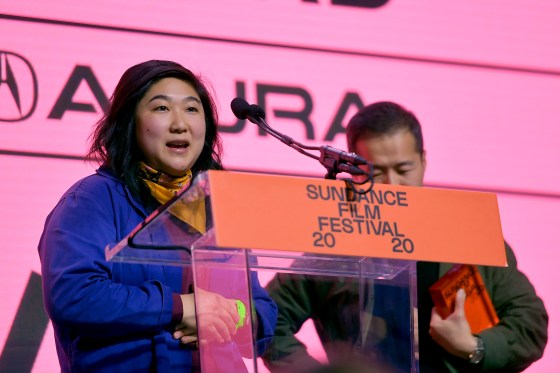
TIME: Minari might not have been made had you not read Lee Isaac Chung‘s script and fought for it to be made at the production company where you work, Plan B. How did you have the conviction to fight for a film that didn’t follow Hollywood archetypes?
Oh: It was the first time I had read something where I felt like I could authentically be helpful. I felt a deep understanding and a connection to the material and to the family. The emotional drama that the family goes through is very similar to mine and also I think very similar to Steven Yeun’s; it’s a little bit of a common thread amongst immigrants, especially Korean immigrants.
It’s very strange: it’s almost kismet. I don’t want to take away from the fact it was a very hard film to get going. I know Isaac has shared his story about how he was almost ready to give up on his filmmaking career. For myself, I was very much like, ‘I don’t know if I’m ever going to tell a really profound Asian story—and if we don’t make this now, we’ll never make something like this.’
Just a few years ago you were serving as an assistant to Dede Gardner, the president of Plan B Entertainment. How did you become a producer?
I have to give Dede and [Plan B co-president] Jeremy Kleiner a lot of credit. It’s super rare to come across people that are willing to give space and agency to the younger people in their company. I feel very much like the product of people who had this desire and a level of honesty to give someone the space to grow. And if you give somebody the space to grow, that’s all somebody needs.
When Okja came along, they were very inclusive of trying to see if it’s something I could help them with. I’d been at the company for a few years and was a fan of director Bong [Joon-Ho]. Being Korean and being able to speak the language was helpful. I was doing office stuff and developmental stuff and helping out with some production stuff, and they were just like, ‘Can you go to Korea?’
You fought for much of Minari to be spoken in Korean. Why was that important to you?
What I loved about his script was that it was so authentic in its emotions. You have to trust that the audience will be able to kind of feel that authenticity: Even if it’s a language that they don’t know, have faith that they’d be able to pick up on that. For me, Isaac and Steven, our parents spoke to us in Korean growing up. So I think that’s something worth fighting for.
What other culturally specific details did you fight to keep in the film?
I really wanted to fight for finding a Korean-American production designer, because we wanted to create the most authentic frame that we could at every frame. Growing up in a Korean household, there are specific things within your home; then you go to your Korean friends’ houses and they have similar things. And you’re like, ‘Oh, I’m not the only weird person that has a family has, like, a bucket in the bathroom or that one plate, or a wall hanging!’ All those things I think are really specific.
Charles D. King
Films include: Judas and the Black Messiah, Harriet
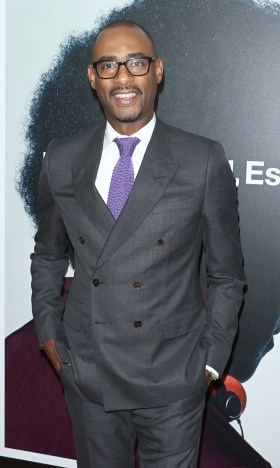
You started your career the William Morris Agency mailroom. What was that like?
At the time, I was the only African American in the film television training program, and there was only one Black agent at the firm. But I will say I was fortunate in that I developed key relationships from my earliest days at the agency, with the vice chairman, board members and other senior members of the firm, who saw great potential in where I was going to go.
It took a little while to get through the early days from the mailroom to a desk. But I was able to connect and build relationships throughout the entire building, and had a lot of support for my vision.
You financed half of Judas and the Black Messiah yourself. How did it get to that point, and can you tell me your thought process behind making such a big investment?
After I launched my [media company] MACRO in 2015, we raised $150 million of capital to finance movies and television. And that was because I knew, from my years of being an agent, the lack of capital resources to finance and tell stories like Judas and the Black Messiah, Mudbound, Sorry to Bother You, and all the other projects that MACRO has financed and or produced.
When Ryan Coogler brought my this brilliant script by Shaka King and asked me to come aboard, he knew MACRO would not only come to the table and work alongside him and his colleagues, but that we also had access to capital that we’d raised just for that purpose. And so we committed to funding 50% of the budget and came up with a production plan within a certain budget range that we thought the market would respond to.
I raised capital to do just this. I knew that then, for projects like Judas and others, we would be coming from a place of empowerment and a seat at the table alongside our studio partners, to make sure the movies were told in the way we wanted to see them made.
What were some decisions that this position of financial power allowed you leverage over?
Shaka was always very clear that he wanted Dominique Fishback to play Deborah Johnson and Jesse Plemons to play Mitchell. I think that in another configuration—had we not been at the table bringing 50% of financing—other studios or companies could have put pressure on Shaka to cast those roles in a different way.
I think it really made for the authenticity of performance. You didn’t have mega-movie stars that took you out of it; You have these brilliant actors who are perfect for these roles. I think having the capital we brought to bear really had an impact on making sure that that vision for who he wanted in the movie remained what we saw.
What advice do you have for young aspiring producers of color?
Support filmmakers and storytellers whose work is compelling—not just business-wise, but creatively. And build relationships with not only the people that are already in the seat of power: work really hard to cultivate your network of other artists and producers and executives that are in your class that are coming up with you. Because you guys, together, are going to be the people that are going to be a part of the sea change.
That’s the part that I get most excited about when I look at this next generation of artists and storytellers: they’re so much more inclined to collaborate with one another and to lift each other up. We’re no longer in the kind of older days of, ‘I’ve got mine.’ Because unfortunately in the past, when it came to people of color trying to be executives, movie stars and filmmakers, there were just so few that were given those opportunities.
That’s the beauty of what happened with Judas: Ryan Coogler, after the success of Black Panther, said, ‘I’m going to use this power and clout to collaborate with my friend Shaka King, whose first film came out of Sundance the same year as my film Fruitvale Station. And then I also want to collaborate with my friend Charles King who’s got capital.’
It was the brilliance of that collaboration that helped to bring this together, because it takes a village. So that’s the advice I would have for the next generation: formulate villages, and lift each other up.
Peilin Chou
Films include: Over the Moon, Abominable

How did you get into the film world?
I grew up in a pretty traditional immigrant family: I was born in Taiwan and moved to the U.S. when I was 5. The more quote-unquote “safe” professions, like doctor, lawyer or engineer, were more encouraged: going into film and TV was completely outside the wheelhouse.
When I went to UCLA for college, I ended up majoring in communications, mostly because I wasn’t sure what I wanted to do. As part of it, I did an internship in the industry, for a TV show called Life Goes On on the Warner Bros lot. It was the first time a major character with Down Syndrome was on TV, and one of the first times an HIV-positive character was on TV. As the intern, one of my jobs was to sort all the fan mail and read it. And I got hundreds of letters about how the show was changing their lives: that they had a son with Down Syndrome or a brother who was HIV positive, and that this show was making them feel seen. It really made me realize that what matters on television is important and meaningful. That’s the moment I got hooked in.
What uphill battles have you had to fight to tell diverse stories, or culturally authentic stories, in Hollywood?
There have been a lot of battles. In the beginning, there were like eight of us in all of Hollywood in terms of Asian Americans. You were always feeling like an imposter: that you were going to say or do the wrong thing and get kicked out of the club. When I would pitch diverse stories, a lot of time, it was like, ‘That’s a great story, but it doesn’t feel commercial.’
When I heard [the animated version of] Mulan had been greenlit at Disney, I made it my sole mission to get a job over there. Luckily, I was able to get a job—but there were virtually no Asian people working on the movie at all. Of course, they tried to be as diligent as possible with research and research trips. But there were a lot of conversations that were had along the way. For example, Shang and Mulan used to kiss at the end of the movie, right there in front of her parents. And it was something [writer] Rita [Hsiao] and I felt extremely uncomfortable with: she would certainly never do that in front of her parents. Luckily, the powers that be heard us and took that out of the film.
That was one of the earliest battles I had in terms of storytelling; it was a moment where I understood that it’s important I’m here and the impact I can have. Even when I saw things that weren’t 100% culturally authentic, I wouldn’t speak up unless it was really bad. I didn’t feel safe just because there were so few of us. I think it’s a dramatically different climate now.
In what ways was making Over the Moon different from past experiences?
One of the reasons why I was excited about Pearl Studio [the Shanghai-based production company Chou led creatively during the creation of Over the Moon] was that its mission was to tell these diverse stories. I didn’t have to go in the room and have people say, ‘That doesn’t sound commercial’ or ‘Could we make the characters white?’ This company was about the opposite of that.
And partnering with Netflix on this film has been really so amazing because for the first time ever, it wasn’t like, ‘Okay, we’ll do the movie even though it’s a Chinese story. We’ll take that risk and hope for the best.’ The point of view of Netflix was really like, ‘We love this project because it’s a Chinese story.’
What role do producers have to play in fighting for change?
It’s not always a ‘fight,’ per se. It’s not like the voices already there don’t want to bring other things into a film—but they may not know of them or know to consider them. For example, from being based in China at the time and with a team of artists there, we wanted [Chinese designer] Guo Pei to do the fashion design for the moon goddess Chang’e. Once [the film’s director] Glen [Keane] heard of her, he became obsessed and was like, ‘It can be no one but her.’ But that’s the kind of thing where you need someone in that room to say, ‘What about Guo Pei? What about this actor or artist?’ It really just expands the universe, in addition to ensuring that stories are told in a way that is authentically true to the culture.
Jess Wu Calder
Films include: One Night in Miami, Blindspotting
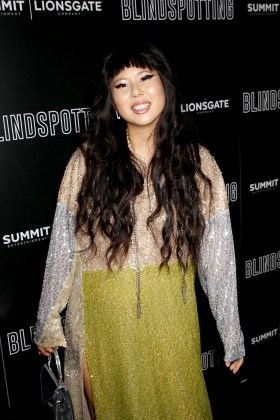
We saw Kemp Powers’ play in Los Angeles in 2013. Theater in Los Angeles is sometimes hit or miss, but within the first five minutes we were completely transported and moved. At the time, all the films I had done had been more in the genre world. When Malcolm X was challenging Sam Cooke to create art that actually inspires change, it sort of felt like the ghosts of the past were telling me: ‘You have a platform and you’re not doing everything that you can to inspire change!’ I really felt compelled to try to do whatever I could to make a difference, whether in my everyday life or trying to tell this story in a cinematic way so it could reach a wider audience.
How has streaming changed things for representation?
I think they have all stepped up within the last year or two to put more of a focus on it. Timing is everything: I don’t know necessarily if streamers would have been quite so hungry if the state of the world didn’t become what it was in 2020. Now, Netflix and Amazon have all of the math in the world: they can actually now see that there’s proof that there’s a hunger for this content. And so these audiences are finally being serviced a bit more. But I do think that there’s definitely room for more growth, and definitely hope that this is not just a phase that everyone is going through.
What role do producers have in the fight for lifting culture and creating opportunities for people of color?
For myself, when Donald Trump was elected, it was definitely a wake-up call. I think I had been living a very naive, rose-colored-glasses kind of life. My parents were immigrants who came here, worked hard and achieved the American dream, which then allowed me to basically tell stories for a living; I’m living such a blessed experience. Because of that, I don’t think I fully understood that that same America could still be the America that elected Donald Trump. It was like, I don’t even understand the country I’m living in.
Everything I made up until that point had been trying to encourage change, but in a more subtle way. If you wanted to watch one of our films, you could just enjoy a good horror film, or understand it was attacking capitalism or anti-colonialism. In that moment, I realized that whatever I was doing wasn’t enough. Everything I’ve made since, I feel like the concept is screaming: that it’s important for us as creators to put forth content that is very clear about the change that is needed.
What advice do you have for young producers of color?
It’s funny, because all my recent success has come from ignoring all the things we were constantly told: ‘Diverse stories don’t sell; you’re not gonna have any foreign value.’ Making films is really, really hard. I have friends that joke, ‘If you’re doing it just to get rich, there are so many ways to make money.’ More than likely, especially if you’re an independent film producer, the odds are not in your favor. If you’re going to make something, make sure it’s something that you are willing to spend 10 years of your life trying to get off the ground; that it’s something you would ride or die for.

Comments
Post a Comment