The day Françoise Brougher was fired from Pinterest began like so many of her workdays. It was April 2, 2020, and the company’s chief operating officer—with her rescue dog Dogbert nearby—was a few weeks into the pandemic and remote work, managing her team of 750 from her home in Silicon Valley. The gentlest social media site, built for “pinning” visual inspiration to virtual boards, appeared to be in equilibrium.
Brougher wasn’t giving much thought to the recent brief but irritating meetings and calls she had had with Todd Morgenfeld, the company’s chief financial officer. On a recent Friday, she had texted their mutual boss, Ben Silbermann, the CEO and co-founder of Pinterest, about what she describes as a particularly dismissive and erratic interaction she had with Morgenfeld where he had hung up on her. On Monday, Silbermann suggested Brougher talk to human resources to smooth over the conflict. It was the first time in Brougher’s 30-year career she had gone to HR about her own issue.
Now, a few weeks later, Jo Dennis, Pinterest’s chief human-resources officer, was on the line. “She said, ‘I want to prepare you for your call with Ben tomorrow,’” recalls Brougher, who had a standing one-on-one scheduled with her boss. “‘Your job is going to change.’”
“I said, ‘Oh interesting, can you tell me more?’ She said, ‘No, I cannot,’” says Brougher. “And I said, O.K., don’t waste my time. Put Ben on the call.’” A calendar invite from Silbermann soon popped up on Brougher’s screen. They exchanged brief pleasantries. Then, he fired his second-in-command over video chat. “I never saw it coming,” she says. “I was like the intern, fired in a 10-minute call.”
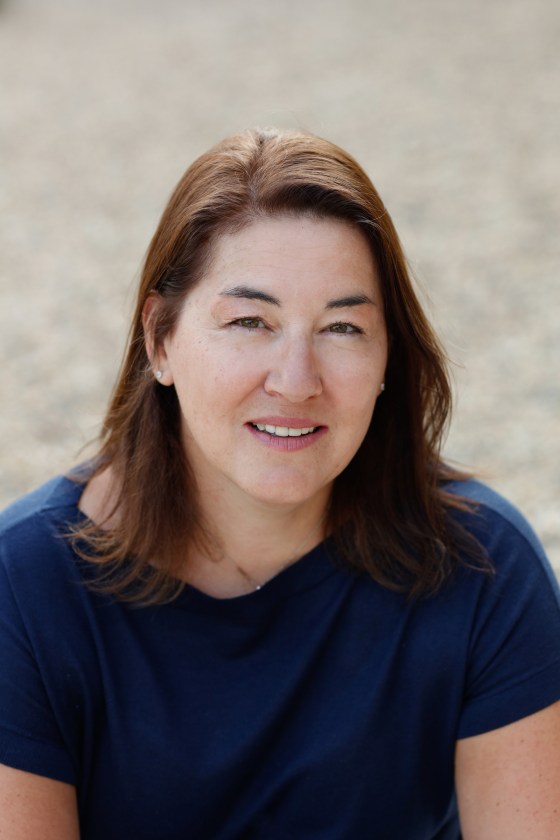
And thus the French-born engineer, 55, would begin a journey far from her decades of anonymity as a Harvard Business School graduate and respected senior executive at Google and Square, suing a company with a market cap today of $122 billion for gender discrimination—the most senior Silicon Valley executive ever to do so. Now, in her first major interview since her lawsuit settled, Brougher says flatly of her last day at Pinterest, “No, we didn’t have a giant going-away party.”
That month, Ifeoma Ozoma was waging her own battle at Pinterest. The daughter of Nigerian immigrants, Ozoma, a Yale graduate who joined Pinterest from Facebook, had been new to the company’s burgeoning public-policy and social-impact department. Wonky and raised in Anchorage, she was behind widely praised Pinterest initiatives that blocked searches for antivaccination posts and stopped promotion of plantation weddings. She also had concluded that she and another experienced woman on her team, Aerica Shimizu Banks, who is Black and Japanese American, were being paid less than what their job descriptions indicated per Pinterest guidelines. Ozoma’s salary disparity—about $64,000 annually—was significant but not as meaningful as the stock grant given every employee based on position, and hers appeared to be 33,675 shares short of what her job description merited. Post-IPO, she says the shares could have amounted to a value close to $2.5 million over a four-year period of vesting. After human resources refused to increase their compensation, they involved a lawyer. The friction, Ozoma believed, caused her white male manager to snipe with statements such as, “Why does everything have to be about race?” Later, Ozoma’s cell-phone number and internal company emails appeared on extremist platforms including 4chan and 8chan following leaks by a white male colleague, a software developer, to Project Veritas, the far-right activist group founded by James O’Keefe. She received threats of rape and death. She kept a gun. She moved. And then she and Banks, whose allegations of mistreatment were dismissed by the company after repeated internal investigations, negotiated their departures in May.
When, on June 2, in the wake of George Floyd’s death, the company posted an earnest Black Lives Matter message on its corporate website and social channels, Ozoma reached her breaking point. “Are you f-cking kidding me?” she thought. Days later, she and Banks, 33, would go public with their stories, violating nondisclosure agreements (NDAs) attached to their severance packages. “I lost my mother in college,” says Ozoma, 28. “I can’t think of a single thing I’ve been afraid of since then, because the worst thing that could happen to me already did.”
Over the next months, Pinterest’s warm, fuzzy veneer would unravel like one of the platform’s chunky knitted sweaters. An employee walkout to show solidarity for Ozoma, Banks and Brougher followed; Pinterest hired law firm WilmerHale to conduct an investigation of workplace culture; a shareholder lawsuit alleged mishandling around issues of discrimination; and a record $22.5 million settlement was paid to Brougher—the largest known settlement for gender discrimination in U.S. history—with $2.5 million of that jointly committed to nonprofits that support underrepresented groups in tech.
Now, nearly a year after their departures, Brougher and the two colleagues she had never met while at Pinterest—all performance-driven, and obsessed with process and results—stand among the most significant figures in a reckoning not just at Pinterest, but in the long exclusionary saga of Silicon Valley, where 5% of tech leaders are women, far fewer are Black or Latinx, and only 2% of venture capital money goes to female founders. Their stories fit an unnerving pattern in an industry once optimistic about changing the world that instead has fallen behind even legacy industries in diversity and inclusion. This, even as study after study, in particular a 2015 McKinsey report, reveals how diverse teams perform better financially. Pinterest, Google, Oracle, MailChimp and Facebook are among the behemoths that publicly champion women and diversity through initiatives and hashtags — even as their own employees come forward as regularly as smartphones on an assembly line with allegations of discrimination and pay disparity. Ozoma calls much of Silicon Valley’s talk performative, or, as she puts it, “diversity theater.”
San Francisco attorney David Lowe represented Brougher and has argued dozens of gender-discrimination cases. His firm handled Ellen Pao’s landmark gender-discrimination case. He calls the stories of professional women “startlingly similar.” “Often the critiques are, like what Françoise heard, ‘You are not collaborative, not good with working with others. Too assertive,’” he says. Being a person of color adds another layer of potential bias and pain, particularly, as in the case of Ozoma and Banks, when a company’s external messaging is at odds with its internal culture or stated company values.
“As you go higher, the number of women and people of color thin out,” says Lowe. “When you get to the apex, there are hardly any. It’s not because they lose talent or interest. In fact they are gaining talent. The only plausible explanation is that stereotypes and subtle forms of bias seep in. It’s like climbing a ladder and then getting knocked down, rung by rung.”
Among all the big talk and little action, the three women are now taking extraordinary steps to help fix things themselves. Brougher says the first two organizations that have received money from her settlement are /dev/color, which supports a professional network of Black engineers, and Last Mile Education Fund, which offers financial support for low-income students to bring them to graduation and into tech. After attorney’s fees and taxes, Brougher and her husband Bill additionally have set aside half of her remaining settlement for groups with similar missions through a donor-advised fund. From the other half, they paid off their mortgage and gave directly to other causes, including medical research. “Some donations will be public, some not,” says Brougher, whose parents never graduated college. “I’m trying to do good with what I got.”
Meanwhile, Ozoma and Banks are flexing their public-policy skills. A California senate committee will hear arguments on March 23 for legislation abolishing employer NDAs around racial discrimination that they and their attorney helped draft. Ozoma raised $108,000 to support the cause and, along with state senator Connie Leyva, Earthseed, her own consulting firm, will act as the bill’s co-sponsor. Ozoma will offer main testimony on behalf of the bill; their lawyer, Peter Rukin, will be the second person to testify in favor, on behalf of the California Employment Lawyers Association. Banks’ powerful letter of support also has been submitted to State Senator Leyva, in which she condemns how NDAs leave victims to “suffer in silence.”
How it happens
In the past decade, social media has been used to share often devastating stories using #MeToo, #BlackLives Matter or more recently #StopAsianHate. Those who post often are met with even more abuse, threats of violence and graphic memes. Consequences for harassment are rare. The consistent message sent to the outspoken: Shut up. Or else.
Pinterest was considered different. A sort of Internet Xanax, since its 2010 launch, it has been a haven for the women who comprise 70% of its users and tilt toward the crafty and domestic. The perils of other social media—the trolling, the culture wars—are largely absent. The top-performing content is about food and drink; after that, home decor. With his benign platform and mild-mannered image, Silbermann, a 38-year-old Iowan, wasn’t a swaggering mononym à la Bezos and Zuck, and certainly wasn’t subject to congressional tongue-lashings or consumer finger-wags. President Trump—presumably not a baker or scrapbooker—never became one of the 459 million users of Pinterest, instead communicating on Twitter, Facebook, Snapchat and Instagram.

It was the potential of that special culture, not yet as buzzy or revenue-optimized as its peers, that attracted Brougher and Ozoma to Pinterest in 2018 a few months apart; Banks joined in 2019. “Like everyone else, I thought Ben was very reserved and thoughtful,” says Brougher. “I was excited.” Another selling point was Pinterest’s upcoming IPO. “Every Big Tech employee’s dream is to work pre-IPO at a company,” says Ozoma. “This wasn’t some no-name startup. This was a company that people love.”
Brougher and Ozoma each would survive Pinterest for only 23 months.
Banks, drawn by the opportunity to lead Pinterest’s Washington, D.C., office, just 12.
At Google, Brougher had run “an unsexy part of [ad] sales,” recalls former Google CFO Patrick Pichette, now Twitter’s board chair. But Brougher became a star, driving revenue for small and medium business to 23% year-over-year growth near the end of her tenure, delivering an annual $16 billion in sales. “She would say, ‘Here’s my return. Here it is by cohort; here it is by month. And here’s what I’ve given you for the last quarter, and what I’m going to do next quarter. And that’s why you should allow me to hire another 46 people,’” says Pichette, laughing. “Resistance was futile … but she also takes the time to listen. Fairness matters to her.”
In 2013, Brougher joined Square, reporting to CEO Jack Dorsey as business lead for the payments platform startup. Like Google, Square had a similar Silicon Valley culture of candor; Brougher recalls the environment as “incredibly egalitarian.” “One of the things we’ve both always agreed on is you come to work to be respected, not to be liked,” says Nextdoor CEO Sarah Friar, Brougher’s colleague as Square’s CFO. “I actually didn’t think about my gender a lot. I worked on Wall Street for 11 years, and believe me, I thought about my gender.” They were both part of the team that brought Square to its 2015 IPO. Today it’s worth $107 billion.
Brougher became Pinterest’s first chief operating officer and its most senior woman. Pinterest’s sluggish $500 million in annual ad sales needed goosing before the April 2019 IPO. Brougher was given half the company, including global ad sales and marketing.
Immediately, she noticed something amiss in the San Francisco headquarters: The culture was secretive. Turnover was high. Decisions were made between Silbermann and a small circle—all men—in private sidebars, causing organizational chaos. Recalls Banks: “The entire structure was built on being friends with the CEO.” Soon, Brougher, who calls herself “excessively transparent,” wasn’t being invited to certain meetings. “I asked why once, twice, and there was always an excuse. And then I’m trying at the next meeting to really contribute to the team, thinking, ‘Maybe they will invite me to the next one.’”
A CNBC story in 2019 detailed the dysfunctional culture. The story ran with the headline, “The nicest company in Silicon Valley: How Pinterest’s friendly culture has slowed decisions and hurt growth.” The writer argued that Pinterest’s avoidant culture was diametrically opposed to confrontational styles at an Amazon or Netflix, citing missed revenue targets set by investor Andreessen Horowitz. One former employee, who claimed to be fired for insubordination after criticizing a strategy by one of Silbermann’s staff, told CNBC there was an extremely passive-aggressive climate. Or as Brougher would later say, “Saying what you really thought was still dangerous at Pinterest.”
In response to request for comment on this story, Pinterest declined to make any executives available, but answered some specific questions and issued a statement detailing their commitment to diversity and inclusion and steps they have taken to improve internal culture.
For the first time in her career, maybe her life, Brougher felt self-conscious. “You speak up and have the feeling people are not focused on what you said,” she says. “A lot has been written about ‘othering,’ that you could be viewed as a female or Black first, not as your job.” In his court filing for Brougher, attorney Lowe cited a 2014 study by Kieran Snyder of tech-industry performance reviews that revealed an “abrasiveness trap” for women, where women are given feedback to be nicer and speak less. The study says “negative personality criticism—Watch your tone! Step back! Stop being so judgmental!”—showed up in 2.2% of reviews of men but 76% of women, even when reviewed by women.
“Having a seat at the table matters, but [also] having a voice at the table matters,” says Brougher. “I didn’t think [Ben] was happy when I had a different opinion. I think when it came from a woman, it was much harder to accept.” Adds Lowe, “So many features of Silicon Valley culture—to be disruptive, challenge the status quo, push back on authority—reward men who show up like that, but are negatives in reviews of women.”

Ozoma eventually would find this to be true. She interned two summers at Google before starting in its massive public-policy and government-affairs department in 2015. Three years later, she left for Facebook, where she contributed to anti-hate-speech initiatives and community standards. There she grew comfortable challenging leadership. “There were meetings where Mark [Zuckerberg] would address the whole company,” she says. “After Charlottesville, he said nothing about the [white supremacists] who had organized on the platform. During the Q&A, I asked, ‘Why haven’t you said anything to employees about Nazis marching in the street?’” Zuckerberg commended her bravery in asking the question, and the audience applauded. He admitted he should have spoken up sooner. Ozoma then questioned Sheryl Sandberg about the difficulty in reporting hate speech in the Messenger app; Sandberg said she would escalate a product fix to make it easier. But Ozoma says people looked shocked when Sandberg, appearing to deflect Facebook’s blame, discussed how much Zuckerberg donated to support social-justice causes. She saved the email the head of diversity and inclusion, also a Black woman, sent her after. “When you asked the question of Mark … there was so much energy in the exchange. I’d love to get a solid understanding from you about what you are feeling and expressing.” Still, there was no retaliation. “Facebook is direct,” says former head of content at Facebook, Janett Riebe, who would later be a colleague at Pinterest as its safety policy manager. “Radical candor would be a euphemism to describe it.”
In July 2018, Ozoma became the second employee at Pinterest in public policy and social impact, a new department amid growing calls for tech accountability. (Ten months into her job, in May 2019, she helped recruit Banks, a seasoned veteran from Google and of the Obama Administration, with a master’s from Oxford.) Ozoma believes from her first meeting she ran afoul of leadership when she questioned the company’s decision to keep InfoWars’ Alex Jones on the platform. “The entire strategy was, ‘Lay low. Don’t weigh in on anything,’” says Ozoma. “And I was like, ‘This is not controversial.’ This is someone who is harassing the parents of Sandy Hook.” Shortly after an inquiry from the tech news site Mashable in August 2018, Mashable reported that Pinterest had removed InfoWars from the platform.
Ozoma, like Brougher, kept pushing for change at Pinterest, developing relationships with the World Health Organization and the CDC to manage health misinformation. She also pushed to stop promotion of plantation weddings. “The not-nice way of saying it is, I am a sh-t starter,” she says. “It was, ‘How do we differentiate ourselves not only having the product but also values and matching the two?’” Her six-month performance review, delivered by her manager Charlie Hale, said she “always exceeded expectations.” Ozoma even received a gift from the company acknowledging her “leadership”; the email informing her read, “Look at you, Rising Star!”
But Ozoma, Banks and Brougher separately had unearthed issues with their compensation. (A 2017 study found Black women in tech were paid 21% less than white men for comparable jobs; all women 16% less.) Ozoma was representing Pinterest in media, and before members of Congress and the U.K. Parliament. Upon seeing the company’s hierarchy of “levels”—an organizational practice used in companies to assign pay—she believed her job description would have put her at a Level 6 instead of Level 4. The company argued she didn’t have enough experience to advance levels, though the documentation didn’t specify years of experience as a requirement. She enlisted attorney Rukin, who had represented plaintiffs in a class-action against Wells Fargo and other discrimination cases. Finding her own leveling at 5 instead of 6, Banks also enlisted Rukin. “[My lawyer] was like, ‘I’ve never had a prospective client this organized with this much documentation,’” says Ozoma. “He told me, ‘I don’t anticipate needing to work more than 10 hours on this.’” Ten months later, with matters still unresolved, he filed complaints for both clients with the California Department of Fair Employment and Housing (DFEH). (A Pinterest spokesperson says the company looked thoroughly into Ozoma’s and Banks’s concerns about whether they were properly leveled, and determined that their pay and level were appropriate. Both DFEH complaints were ultimately settled in mediation.)
Meanwhile, Pinterest’s public-policy work kept gaining applause. Banks created a partnership with the U.S. Census Bureau; Ozoma was quoted on the front page of the Wall Street Journal, and the U.S. Surgeon General retweeted a tweet that name-checked Ozoma. Proudly, Silbermann, the son of two doctors, put the tweet in the company Slack. “The day that I was on an interview with [NPR’s] Audie Cornish, I was exchanging emails with my lawyer,” says Ozoma. “I wasn’t threatening. They knew that I was so loyal.” But, she says, Hale took a turn. In one performance review, he acknowledged her work in deprioritizing slave-plantation content but said she should have provided “the pros” of promoting slave plantations. She says he would also verbally remark on her “tone” (as Banks said he would later do with her). After her personal information was leaked online by a male colleague, Ozoma says, even though she texted Silbermann screenshots of the threats she was receiving, the company did not help her have the content taken down, and she relied on friends from other tech companies. Riebe says the winds were shifting. “Once she persisted [about pay], it got nasty,” says Riebe. “She was starting to be kept out of loops. She had a fantastic reputation, and then [there was] a slow morphing into, ‘You are too much.’”
Banks was feeling gaslit even before she officially started. Hale told her Pinterest wouldn’t publish a press release announcing her, a customary gesture by tech companies to inform Congress and lobbyists of a new point person. She says a recruiter also asked in a phone call that she not share details of her offer. (Since 2015, it has been illegal for California employers to ask workers to keep compensation confidential.) It all gave her a funny feeling. But Banks already had resigned from Google and felt “between a rock and a hard place.” In her first month, she alerted the general counsel and other senior members of the team about the risk of employee information leaking from a potential attack from Project Veritas. The group claimed to be holding information from Pinterest. Banks says she was brushed off and told not to reply to the email chain again. The information dump ended up including the personal details about Ozoma shared on 8chan and 4chan.
In September 2019, Banks says Hale scolded her for not looping him in before Silbermann signed a “CEOs for Gun Safety” open letter to the U.S. Senate that earned wide praise (Pinterest disputes that account.) Soon after, Hale, Ozoma and Banks would recommend reversing a new Pinterest decision made by senior leadership to eliminate holiday pay for the lowest-paid contractors in food services, sanitation and security, many people of color and some disabled. An internal email suggests that the PR department grew concerned after an employee heard two of the workers bemoaning the cutbacks. Banks, whose mother was a low-wage housekeeper, was tasked with drafting the proposal; she consulted with two of the company’s outside lobbying firms. She sent the proposal to general counsel Christine Flores; a long, painful chain of emails followed where Banks was accused of not following process or being professional. “She told me it wasn’t my place to interfere in business decisions,” recalls Banks. Flores told her the decision was being reversed, but that she had nothing to do with it. Flores later initiated an investigation, claiming Banks lied about buy-in from the lobbying firms. (A Pinterest spokesperson says the company disagrees with this characterization of their exchange.) Banks says one of the firms, Brownstein Hyatt Farber Schreck, denied their formal involvement to Flores. Banks, however, kept notes from their meeting, and emails, reviewed by TIME, where Brownstein execs congratulated her on the decision reversal. She and attorney Rukin never learned the outcome of the investigation. In her next review, Hale said a goal should be to “build her credibility.” She continued to represent the company before the Department of Justice and members of Congress. She went on antidepressants for the first time in her life.
Eventually, Rukin would represent both women in their confidential negotiations to separate from the company. Banks was replaced by a white man.
That same year, a routine filing for Pinterest’s IPO disclosed, among other information, compensation of the highest-paid executives, and Brougher learned of her own inequity. Brougher says she had been told that all executives had the same vesting schedule for their stock grants: 10% the first year, escalating to 40% in the fourth. She saw she was the only executive in leadership whose equity vested that slowly. In her first year, she vested 37% of what her closest peer, CFO Morgenfeld, had. She went to Silbermann; HR adjusted the grant. But that seemed to make things worse. She says she was disinvited from board meetings. When 2019’s Q3 revenue targets were missed, she discovered engineering and product issues that contributed to ad serving problems. After raising the issue, she says she was disinvited from product meetings, which Silbermann oversaw. In her next review, she was told she was “not collaborative.”

Morgenfeld gave Brougher a peer evaluation in January 2020 (she was not asked to give one to him). Prompted to provide written remarks about her positive qualities, he came up with just one line: She “seems to be a champion for diversity issues.” “It was very hurtful,” says Brougher. “I’m keen to be recognized for my merit vs. my gender.” Indeed, Brougher rarely wore her gender on her sleeve. The Information editor-in-chief Jessica Lessin recalls once proposing a story to Brougher when she was at Square about Dorsey’s female lieutenants. Brougher, recalls Lessin, said to her, “There is no upside; there are so few of us.”
On Silbermann’s advice, Brougher called Morgenfeld to clear the air; she says he called her a liar about her description to Silbermann about their previous conversation and hung up on her. Silbermann shrugged, and according to her legal complaint, told her they were like “an old couple fighting over who would make coffee.” Brougher was aghast. After that, Morgenfeld stopped speaking to her entirely. Brougher wrote Dennis one last time for help. She never answered. A week later, Brougher was fired, offered the standard severance from her employee agreement, asked to sign an NDA and to sign off on an announcement that she “resigned.” She refused. “I said, ‘You just let me go. Please write whatever you want. But write the truth because you are accountable for the truth.’” She called friends including Pichette. “She was angry in the way she can be where she stays calm. Laser guided,” he says. “She knew she was done wrong.”
The fight for fairness
On June 2, Pinterest, like other companies, posted Black Lives Matter messaging after George Floyd was killed. “With everything we do, we will make it clear that our Black employees matter,” wrote Silbermann on the company website. Incredulous, Ozoma and Banks, 13 days later, laid bare details from their Pinterest tenures on Twitter. The women rolled out their words like a policy campaign: writing tweets in advance, deciding what time to post and giving their extensive press contacts a heads-up. They went viral. Lady Gaga posted the news on Instagram. The Washington Post, Fast Company and NPR jumped on the story. Insider talked to nine more Pinterest employees with similar stories about abusive behavior, lower pay, and medical and psychiatric problems said to have arisen from company toxicity. “People were crying every single day,” one employee told Insider.
It was the first time Brougher learned about what happened to Ozoma and Banks.
Brougher had been working with her attorney, Lowe, on a settlement. When Lowe’s firm had represented Pao in her 2012 trial against venture-capital firm Kleiner Perkins, it had been the highest-profile case alleging gender discrimination in Silicon Valley. During the trial, in something media deemed the “Pao effect,” women at Twitter, Facebook and Microsoft would also sue for gender discrimination, inspired by her actions. “Ellen’s case broke ground not just for Françoise but for others,” says Lowe. Pao was offered a settlement but declined due to its requisite NDA. She lost her jury trial. The opposing counsel at the time, attorney Melinda Reichert (who would also serve as opposing counsel for Pinterest against Ozoma, Banks and Brougher) gave a 2015 interview to Bloomberg Law, where she discredited gender discrimination as a reality: “I just find that kind of hard to believe because I look at women who are successful — like Sheryl Sandberg. She says that women have to do things differently than men do to succeed. If you’re constantly thinking that you’re being treated differently, it becomes a self-fulfilling prophecy.”
Lowe tried bringing Pinterest to the table for a financial settlement for nearly five months. He was ready to file suit, but Brougher wanted to write a blog post in her own words as well. Uber engineer Susan Fowler had done so a few years ago, triggering a chain of events that led to CEO Travis Kalanick’s ousting. “I wanted to explain that there is a build up to [these things], the culture allows behavior,” Brougher says. “The line was crossed when a description of my performance was reduced to my gender. When I complained about the discrimination and was fired four weeks later — that was retaliation.”
On Aug. 11, Françoise Brougher v. Pinterest, Inc. was filed in California superior court. And Brougher—after a family meeting with Bill and their three kids—posted an essay on Medium under the headline, “The Pinterest Paradox: Cupcakes and Toxicity,” detailing in clean, spare language her experience at the company.
Like the tweets earlier, her story caught fire. Jack Dorsey retweeted the story; Susan Wojcicki, CEO of YouTube, tweeted: “This story from @FrancoiseBr is important showing discrimination against women in the workplace. Françoise is one of the best execs I’ve worked with so it can happen to anyone.” Three days later, Pinterest employees staged their walkout. Says Ozoma, “It was a visceral reaction from employees at a company where employees don’t have visceral reactions.” The Verge summed up a view gaining traction: “The nicest company in tech is looking pretty mean.”
Brougher reached out to meet Ozoma for the first time through mutual friends. Both have an understanding of the complicated intersection of their stories, one that ended with a privileged white woman, already a millionaire, receiving even more millions while the two less senior Black women did not (Ozoma got six months of severance, lost her unvested stock, and is paying COBRA for her insurance; Banks won’t disclose her settlement). “I was so proud that my speaking up could lead to the second most powerful person at the company speaking up,” says Ozoma. But, “the way history has always worked is that Black women lead a movement and then get left out usually in the telling of it. Thankfully, the history had already been written.” Ozoma contacted reporters who didn’t acknowledge the intersectionality. “But at the end of the day, my issue has always been with Pinterest and will always be with Pinterest.”

Meanwhile, Pinterest spiraled. In September, the Verge reported that a Pinterest finance employee who reviewed payroll data and discovered that Black people at the company were paid less than white counterparts was reprimanded by HR. (Pinterest denied the employee was reprimanded, and said an investigation revealed that the employee’s comparators were wrong.) A few weeks before Brougher’s settlement announcement, an investor lawsuit was brought by the Employees’ Retirement System of Rhode Island, which oversees $8.5 billion in assets. The suit claimed Pinterest executives and board members breached their fiduciary duty by failing to respond to allegations of workplace discrimination. The complaint alleged that the CEO “repeatedly placed himself before the Company, surrounding himself with yes-men and marginalizing women who dared to challenge Pinterest’s White, male leadership clique.”
That may have been a trigger for the company to finally act. An internal document reviewed by TIME laid out how the company’s chosen public response to a media crisis depends significantly on how severely senior leadership believes a story will impact the stock price.
On Dec. 14, Brougher and Pinterest announced their settlement — minus an NDA. The Information’s Lessin says a certain pragmatism may have been at work: “Companies are competing to be the best place to draw the best talent. It used to be jockeying for engineers with free food. Now they have to compete for culture.” Though the Guardian reported that Ozoma and Banks felt like the settlement was a “slap in the face,” Ozoma clarifies: “Not a slap in the face from Françoise. But a slap from Pinterest because … What is the point of speaking up first and doing all this work, both physical and emotional labor, to then not even be credited properly?” Neither Ozoma nor Banks would receive additional money or hear from Pinterest again.
Pinterest declined to make any executives available for this story. But a spokesperson emailed this statement: “The leadership and employees at Pinterest are committed to a shared goal of building a company we can all be proud of. One that’s diverse, equitable and inclusive, where employees feel included and supported. Over the past year, we’ve made a number of changes to improve our company culture, including revamping our unconscious bias training, more pay and level transparency, developing an employee-led change network, and working to improve representation in our workforce, especially for senior positions.”
Moving forward
Brougher has spent the last couple of months between her California home and her childhood hometown in France, hiking and spending time with her family after separately losing both her mother and her father in early 2021. She isn’t losing sleep over being marked as a troublemaker. (It’s a position she knows she’s privileged to be in; her 2019 compensation at Pinterest was $21.7 million.) Asked whether Silicon Valley companies may be hesitant to hire Brougher in the future, Pichette says, “Not the good ones.” Ultimately, during her tenure annual revenue grew from about $500 million to $1.1 billion, and Pichette believes Brougher was largely responsible for much of Pinterest’s success today. But she’s keeping her options for the future open—whether C-suite or advocacy. Her contributions to /dev/color and the Last Mile Education Fund became the largest individual donation either organization had ever received, and she has created a spreadsheet to study more potential beneficiaries.
Meanwhile, Ozoma and Banks are spearheading a movement. In 2018, in response to the #MeToo movement, California had passed the STAND Act (Stand Together Against Nondisclosure Act) that banned NDAs in cases of sexual harassment, assault and discrimination. But when Ozoma and Banks violated their NDAs, they weren’t protected from talking about racial discrimination. “Racism and sexism are intertwined,” says Banks, who recalls the impossibility in determining from her experience, “Is this a racist or sexist thing that happened to me?” Through Rukin, Ozoma and Banks reached state senator Connie Leyva, and they drafted the Silenced No More Act. The law would “empower survivors to speak out—if they so wish—so they can hold perpetrators accountable and hopefully prevent abusers from continuing to torment and abuse other workers,” Leyva said in a release. If it passes through committee, it will go to the floor for a vote this summer. When asked if Pinterest supports the legislation, a Pinterest spokesperson deflects, emailing that employees, among other internal remedies, can call the company “hotline” to report “inappropriate conduct.”
Both women have since launched their own companies: Ozoma started Earthseed, a consulting firm that advises on public policy and, yes, tech accountability; Banks launched Shiso, an advisory and consultant firm around issues of diversity, equity and inclusion in tech. They were gratified to see Pinterest add two Black women to its board. “Black women, whatever comp is being offered, take it,” Ozoma says, but “I wish they had gotten on the board without the stink of what happened at Pinterest.”
As for the ripple effect, “There is a head on a stake in the middle of the town now,” says Pichette. Referring to ousted Uber CEO Travis Kalanick, he says, “The Travises of the world, the VCs … It’s now like, ‘Travis, you can’t do that.’ Those days are over.” He says boards and bosses now have something to point to. “People can say, ‘We’re not paying $50 million’ because of [your bad behavior].” He believes the Valley’s real change will come from startups, where they have a shot at getting it right from the outset, arguing that the biggest companies are “freaking huge aircraft carriers with all the problems of discrimination and everything else, and 150,000 people … once you’re up to 30,000 engineers and 20% are women, you will never get out of it.” Nextdoor’s Friar says, “It is definitely a flag to every company. It’s not just a cultural thing. There could be massive business ramifications.”

Problems are easier to identify than solutions of course. Since the Pinterest implosion, several tremors have rocked Silicon Valley. Timnit Gebru, a co-leader of Google’s Ethical AI team and one of its best-known Black female employees, says she was fired after criticizing the company’s lack of progress in hiring women and people of color, something that impacted biases built into AI technology such as facial recognition. A white female AI researcher, Margaret Mitchell, was later fired as well. A colleague in AI tweeted that the company was running a “smear campaign” against the two women. And the U.S. Labor Department recently announced that it was giving up on its class-action suit alleging pay disparities at Oracle withheld $400 million in pay to Black, Asian, Latinx and female workers.
In other words, broken culture remains as ubiquitous as cookies on a computer. “Clearly there’s something wrong with the numbers,” says Friar, “because there’s just no way half the population isn’t showing up in half of the slots.” Brougher says we will know we have equity “when we see mediocre women getting through the executive ranks because I can tell you there are a ton of mediocre men.”
At Pinterest, the stock price recently hit its all-time high. Forbes says Silbermann today is personally worth $4.1 billion. All the managers named in the women’s stories remain at Pinterest except for HR lead Jo Dennis. On Nov. 13, four weeks before Brougher’s settlement was announced, Dennis sent a note to the Pinterest staff saying that “after 24 years of nonstop work” she had decided to spend more time with her family. Banks calls Dennis “the scapegoat.”
“The woman got the blame as usual,” says Ozoma. “They should all be held accountable. But you know what? They can never run away from this even when their kids look their names up online. This will always be tied to them. For that, I will forever be grateful to the Internet.”
—With reporting by Mariah Espada, Simmone Shah and Julia Zorthian

Comments
Post a Comment