New top story from Time: This Vermont Utility Is Revolutionizing Its Power Grid to Fight Climate Change. Will the Rest of the Country Follow Suit?
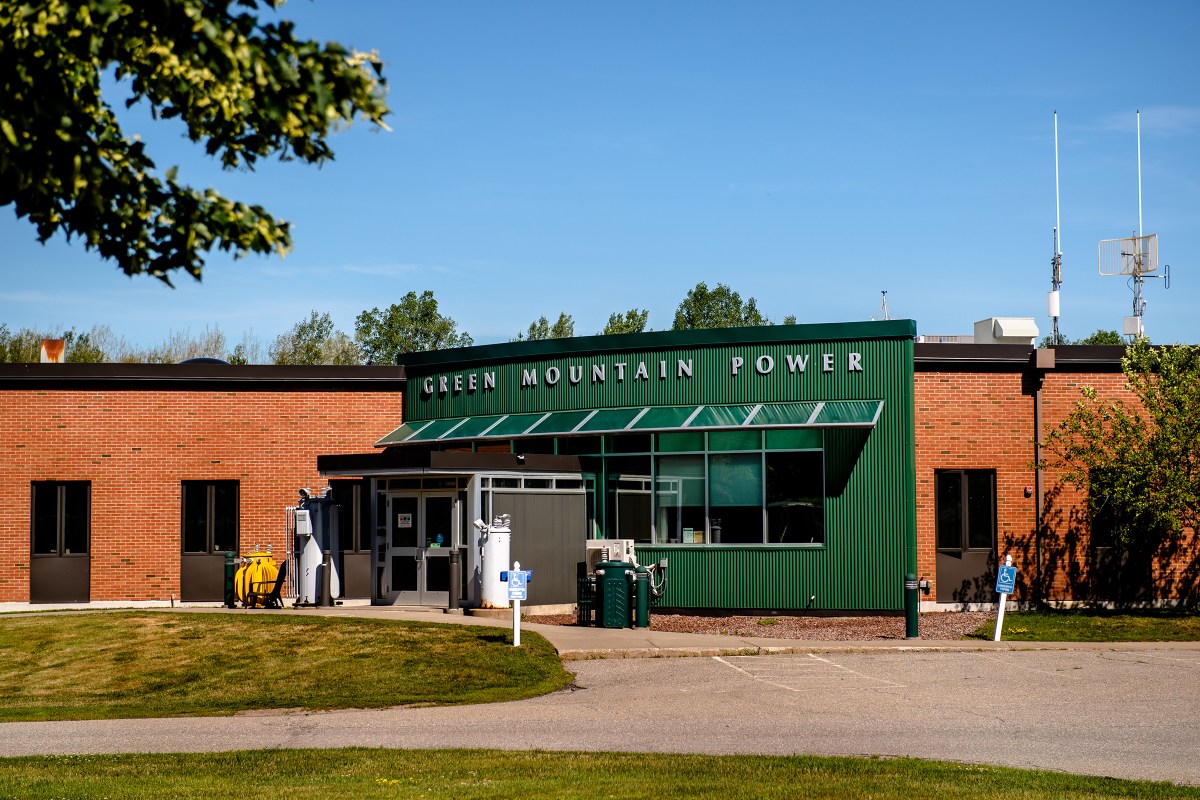
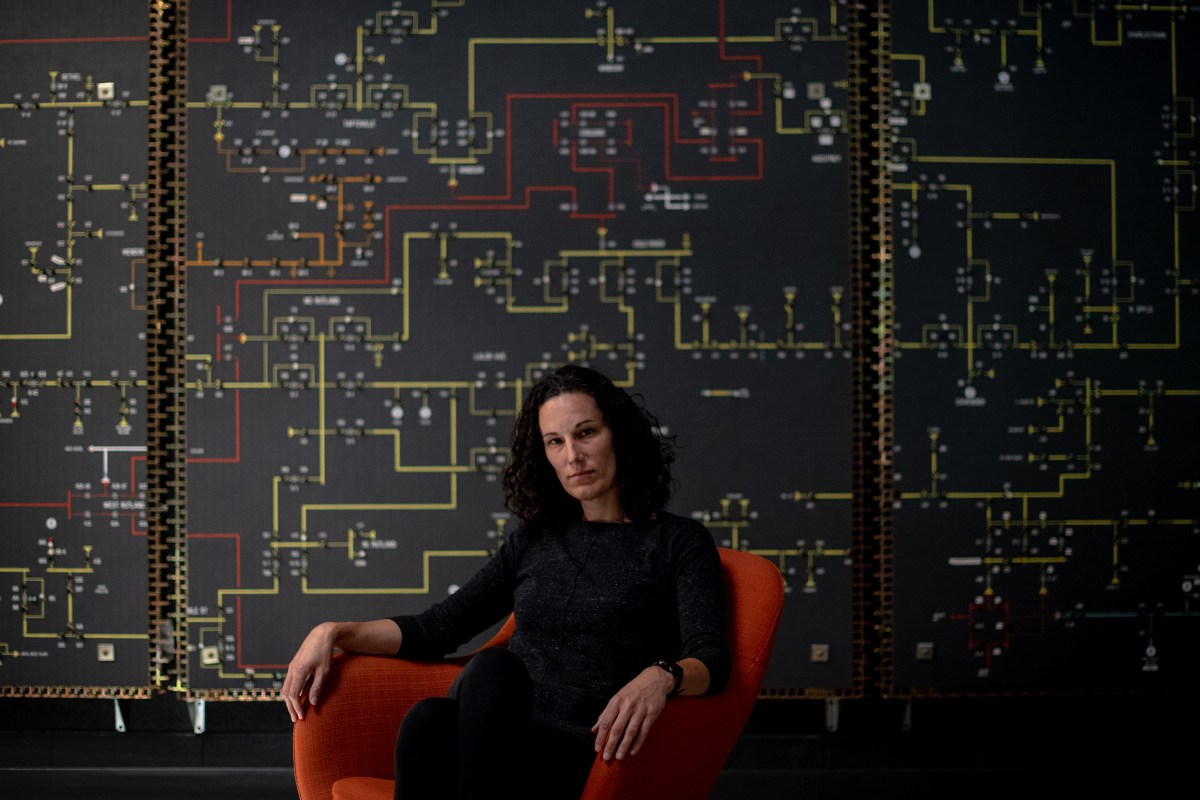
Visitors entering a code-locked central control room at Green Mountain Power (GMP)’s Colchester, Vt., headquarters instinctively lower their voices, whispering in deference to operators relaying orders from behind semicircular clusters of screens. It’s an intimidating space; one side of the black-walled room is taken up by a display showing a sprawling, yellow-lit maze of connections and symbols: a map of electricity flowing across the local grid. Technicians here have the daunting job of managing that vast, interconnected network; controlling hundreds of breaker switches; monitoring solar and hydroelectric electrical output; and anticipating energy demand spikes to keep Vermont’s lights on. When there’s an outage, these operators help coordinate the painstaking work of bringing the system back online.
[time-brightcove not-tgx=”true”]
“It’s basically like a puzzle,” says Jeff Lawrence, a seven-year control-room veteran. “When a storm comes through, the puzzle falls apart. You’ve got to put it back together, one piece at a time.”
In Vermont and around the country, those puzzle pieces have been falling apart more often as climate change makes extreme weather events more frequent and severe. Last month, extreme high temperatures pushed power grids in the Pacific Northwest to their limits, while around 700 people were killed during Texas’ massive power outages this past winter. “It’s heartbreaking to see weather events come through, and to see the impacts of climate change happening all over the country,” says Green Mountain Power CEO Mari McClure, sitting in a conference room at company headquarters.

McClure speaks in measured tones, drawing shapes with her hands as she explains that, in part to mitigate the threat of climate change, GMP is in the process of transforming its grid. It’s moving away, she says, from large generator plants and long transmission lines, and toward a more decentralized approach premised on technologies like networks of utility-connected devices and new, cheaper battery storage, in a system meant to protect against massive power outages and hasten a transition away from fossil fuels. McClure, onetime MVP of the University of Buffalo’s women’s basketball team, is fond of sports metaphors. “You play hard, and winning takes care of itself,” she says. “That’s the analogy to our transformation work.” But just as in a basketball game, when it comes to the gargantuan task of remaking the nation’s power grid to avoid climate catastrophe, the clock is running out.
Decarbonizing the U.S. electrical system is not as simple as replacing every fossil-fuel-burning power station with a wind farm or a solar field. Unlike coal and natural gas, renewable resources are intermittent—meaning they don’t work when the wind doesn’t blow or the sun doesn’t shine. A major shift to renewables will require electric grids to be reconstructed to account for those limitations, a massive and costly undertaking. National leaders have made plenty of pledges to address both emissions and resilience, but have been slow to implement real-world solutions. Lately, GMP and other forward-thinking power companies have begun bridging that gap, piloting the complex systemwide reconstruction and engineering workarounds necessary to create a reliable, carbon-free power grid before it’s too late.
Rural Panton, Vt., is home to GMP’s newest effort to remake the electric system: a “microgrid” attached to a solar power plant, which can distribute its electricity to parts of the nearby community in case they get cut off from the main energy network due to falling trees or heavy snows, common occurrences in this isolated New England town. GMP engineers spent two years modeling electrical scenarios and testing components to make sure the system would work safely. “I can come up with 10,000 reasons why you wouldn’t pursue this,” says Josh Castonguay, VP of engineering and innovation at GMP, standing near a 4.9-megawatt storage battery that helps power the grid when the sun isn’t shining, and which doubles as a local energy supply for the town in an emergency. “This won’t work. That won’t work. They’re all things that you’ve just gotta engineer through.” When activated this month, the Panton system will become the first U.S. utility-built community microgrid able to run on renewable energy without a fossil-fuel backup.
Getting a system like this up and running isn’t easy. For one thing, power-line circuit breakers—which cut off electricity if, say, a tree knocks down a utility pole—weren’t designed to operate with only a single battery pumping power through their lines. GMP’s solution is a novel use of a type of transformer known as a grounding bank to increase the voltage of Panton’s microgrid high enough to make sure its breakers trip if electrical wires are damaged.
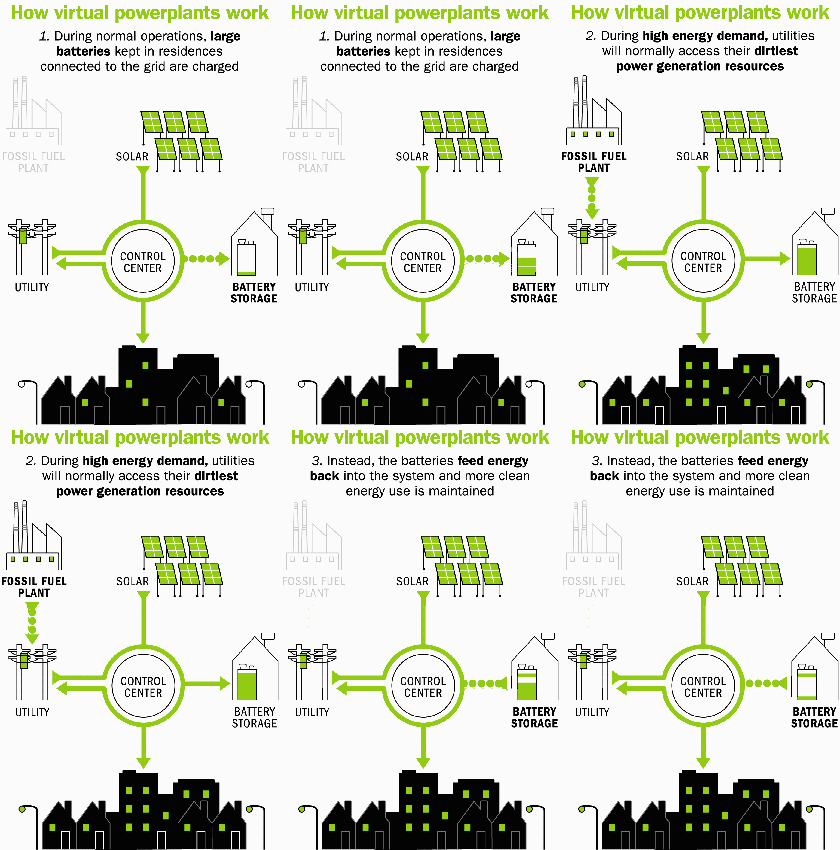
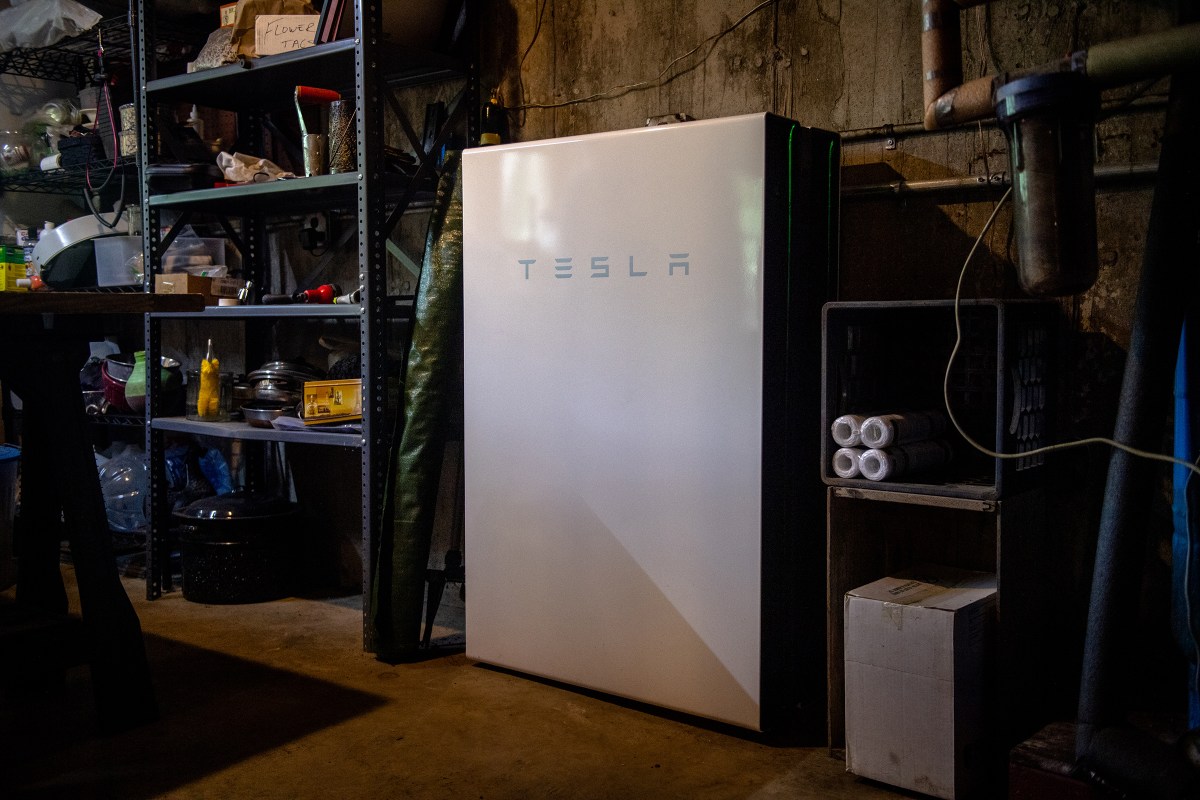
Another of GMP’s grid-modernization projects is to lease Tesla Powerwall battery backup systems to homeowners at below-market rates—and then use them, with homeowners’ permission, to help cover a community’s electricity needs during peak times (it promised to leave plenty of charge prior to snowstorms or other weather events that could bring down transmission lines). When the program began back in 2017, it was the first such utility-sponsored initiative in the U.S.; nearly 1,000 Vermonters had signed up within a year. State regulators approved it as a permanent program in late 2020. It offers huge climate benefits: utilities often tap their dirtiest electricity generation resources during the most intense periods of high demand a few times a year, either by purchasing power from fossil-fuel plants in far-off states or spinning up dormant natural gas-fired “peaker plants.” With its Powerwall program, GMP can offset some of that peak demand, dumping stored electricity onto the grid from garages and basements around the state, a type of setup known as a “virtual power plant” (VPP). (The term also refers to networks of other devices, like water heaters, that utilities can control remotely to manage the grid.)
Other U.S. utilities have since started similar battery grid programs, many with advice from GMP. New Hampshire’s Liberty Utilities started a battery VPP program in 2018; Rocky Mountain Power of Utah, Wyoming and Idaho did so in 2019; and Portland General Electric and Southern California Edison launched programs last year. Battery-making firms and installers like Sonnen and Sunrun have partnered with utilities, participated in utility programs that allowed multiple installers to contribute batteries, or, in Sonnen’s case, networked their own U.S. home battery communities. (The U.S. is playing catchup here to some extent; such initiatives have existed outside the country since 2015.) Meanwhile, GMP has expanded its own VPP initiative, investing about $30 million to sign up more than 2,000 homes in one of the largest utility-coordinated home battery programs in the country.
Energy experts say VPP systems are essential in the near term, in part because they can help prevent overloads like the one that crippled Texas earlier this year. In the longer term, transitioning to renewable energy will require accounting for intermittency, which means building a huge amount of energy storage so power is available on cloudy or windless days. Exactly how much energy storage the U.S. will need depends on factors like how much the country chooses to invest in new transmission lines—which can reduce the need for batteries by moving energy from wind farms and solar fields that are producing power to areas where renewables are idle—but projections range from around 150 to 450 gigawatts of capacity, or total potential power output, to make a fully renewable, national system work. (The Hoover Dam, for context, has a 2-gigawatt capacity.) Utility-scale batteries like the one in Panton could account for much of that new storage, along with hydropower pumped into reserve reservoirs. But rolling out VPP battery systems as well could make the job easier and cheaper than building utility-scale batteries alone, as VPPs will be more cost-effective in many cases, reduce the need for new transmission wires to connect large batteries to the grid and provide the additional benefit of home backup power in case the electricity goes out.
When it comes to systemic change in the power system, local opposition has a reputation for derailing even the best-laid green-energy plans. Some of GMP’s wind-turbine projects, for instance, have gotten pushback from residents concerned about noise and marred hilltop views. In Panton, the company started selling the community on a solar field and microgrid back in 2015, scheduling calls with town board members and bringing delegations to council meetings. “I think they were just trying to feel us out,” says Howard Hall, chairman of the town’s select board, in the 18th century former church that serves as town hall for the Lake Champlain community of less than 700 residents. GMP ended up upgrading that 150-year-old building with new LED lights and electric heat pumps, and installing the community’s first and only streetlight at a nearby intersection. The charm offensive worked—aside from a few grumbles, Hall says locals have been happy to work with GMP to test the company’s new microgrid project. “My residents can get reliable power no matter what the conditions are, and it doesn’t cost us anything,” says Hall. “Why wouldn’t we do it?”
The desire for backup power in snowstorm-prone Vermont motivated some participation in GMP’s VPP program as well, but many residents also joined out of concern for a warming climate—a weighty issue in the broadly liberal-leaning state (69% of Vermonters think climate change is affecting the weather, 5 percentage points above the national average). Many locals have noticed winter snows disappearing, summers growing hotter and springs seeming to come sooner every year. “I’ve just been so alarmed by what we’re dumping into the atmosphere, and the global effect it’s having on ecosystems,” says VPP participant Gerry Hawkes, 71. He and his wife Karen Hawkes, 73, showed me a GMP-connected battery in the basement of their log house, which Gerry built decades ago on a hilltop in Woodstock, Vt., 50 miles southeast of Panton.
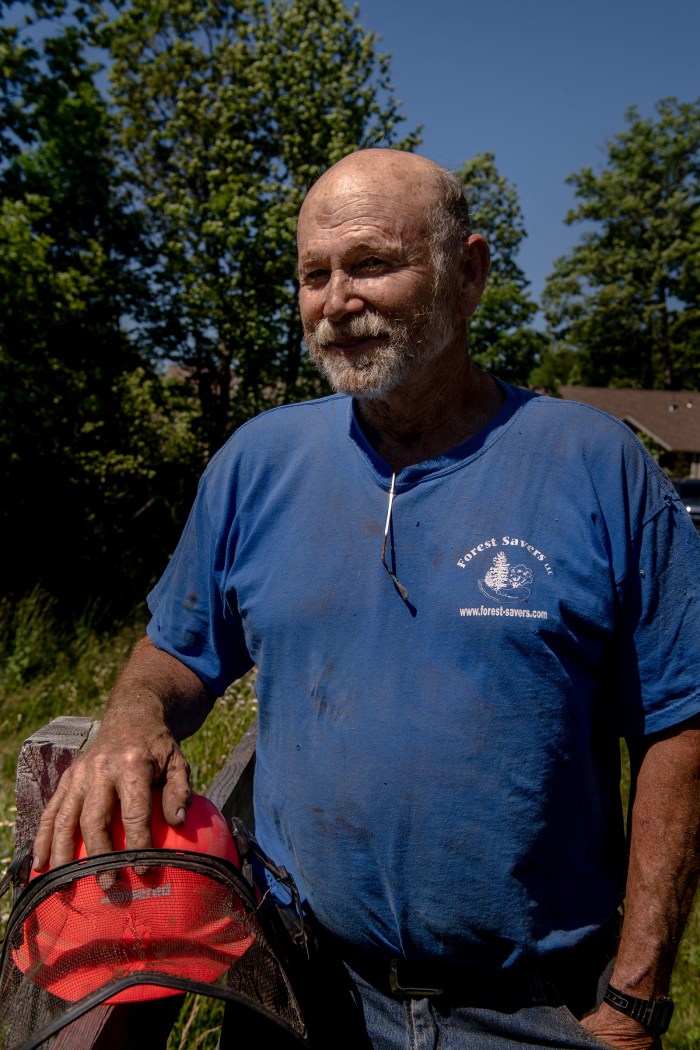
Gerry spent his career working as a forester and inventor, developing innovations like a modular bicycle-path system and a wheelbarrow-like tool for clearing earthquake rubble. Now he runs a business mitigating local invasive plants without herbicides, using a jerry-rigged flamethrower and a self-designed tractor-mulcher he calls the “Forest Saver.” He’s affable, smiling as he speaks, but his tone turns somber when the topic turns to environmental issues—particularly the threat that climate change and other environmental stressors pose to New England’s famed forests. “We don’t know how fast things are unfolding, but we’re not going in the right direction,” Gerry says. He points out a stand of trees with yellowed and thinning leaves. “See, there’s plenty of room for them,” he says. “They shouldn’t be dying like that.”
Mari McClure’s tenure as chief of GMP has coincided with a renewed national focus on climate change and grid resilience that goes up to the highest levels of government. “As we’ve seen more hurricanes, and more challenging environmental issues from severe weather, we want to have a resilient system,” says Patricia Hoffman, acting assistant secretary at the U.S. Department of Energy’s Office of Electricity. Still, energy experts say the country’s grids aren’t being modernized fast enough. Some large utilities, like North Carolina–based Duke Energy, have proposed “pathways” to zero out their emissions that still rely on building new natural gas plants, even as consensus grows that such projects are impossible to justify from a climate perspective. Other utilities are making slow headway on new grid initiatives. Orange and Rockland Utilities, a subsidiary of New York–based Consolidated Edison that services parts of northern New Jersey and southeastern New York, launched a solar battery VPP project last June, but a year later had not yet brought any home batteries online. (The utility says COVID-19 slowed their plans, because they weren’t able to do direct door-to-door marketing.) Meanwhile, some new transmission lines, another essential component of a green transition, have been mired by local legal challenges, a bad sign as the Biden Administration prepares to expand such infrastructure. Battery storage, meanwhile, may be too expensive to build at the multihundred-gigawatt scale needed for decarbonization.
Other countries have moved faster than the U.S. on innovative grid enhancements. Australia is developing what it says will be the world’s largest VPP system, connecting 50,000 home batteries. In the U.K., Kaluza, a spin-off of British energy supplier Ovo, is paying customers to access their electric-car batteries while they’re charging in order to help manage electrical peaks (company representatives say the firm will expand to the U.S. in coming months). A similar, decentralized initiative from Ford, which uses batteries on its upcoming electric F-150, may be years away.
In the U.S., new transmission lines are waiting on federal money, while utility-scale storage, though growing, would also be spurred by additional public investment. In the world of VPPs, some U.S. utilities blame slow progress on state regulators that control utilities’ spending and fees, and which can create disincentives for utilities to put money toward new, advanced grid programs if there are no mechanisms to recoup their investments. Battery installers like Sunrun say utilities themselves are purposefully slowing down such initiatives. “There are definitely utilities that are not as forward-looking at Green Mountain Power,” says Chris Rauscher, who directs Sunrun’s policy and storage market strategy. “Historically, those utilities’ playbook has been to delay, delay, delay, just throw sand in everyone’s eyes, because they want time to try and figure out where the future is headed and how they can benefit.” Yet some observers say the battery-makers aren’t blameless either. Interoperability—or the ability for batteries from different manufacturers to work as part of a single system—is a significant obstacle to widespread use of VPPs, since utilities have to be able to charge or discharge large networks of batteries in tandem in order to manage demand spikes. But battery-makers aren’t exactly falling over themselves to work together and overcome those problems. “They all think they can monopolize the market,” says Arshad Mansoor, CEO of Electric Power Research Institute, a nonprofit energy-research organization.
And regardless of blame, there remains the sheer enormity of the task ahead, and the scant time left to accomplish it. Electrical systems are premised on large, centralized “base-load” power plants that push a constant current of electricity to the far extremes of the grid, with additional power plants that kick in extra electricity when it’s needed. Indeed, removing carbon emissions from base-load plants might be the final frontier in green grid conversion. Nuclear energy can provide base-load power, but new atomic development has been sluggish for years, thanks in part to enduring public-perception issues following high-profile accidents, while carbon-capture fossil-fuel systems—which could theoretically generate zero-emission base-load power—are still years from large-scale implementation. And though renewable-energy resources like wind and solar produce plenty of power, intermittency means it will be extremely difficult for them to take over for base-load plants without enormous amounts of new transmission lines and storage, from networks of small batteries to multimegawatt behemoths.
Facing the task of remaking that system, McClure is cautiously hopeful. “Utilities across the country are getting better at seeing that we’ve run out of time with fossil fuels,” she says. “On the other hand, we have to move faster as an industry.” Karen Hawkes is hopeful too—she says she’s witnessed an environmental turnaround before. Through the 1970s and 1980s, many of Vermont’s trees began to sicken and die en masse, a phenomenon linked to acid rain from cars and smokestacks, before 1990 amendments to the Clean Air Act helped reverse the decline. She recalls that, during the worst period, her husband Gerry shook with emotion after examining scant, sickly foliage on a maple tree near their house. “I can remember Gerry saying, ‘I think in five years we won’t see the maple trees.’ And I was devastated by that remark,” Karen says, standing near the same tree Gerry had studied decades ago, its leaves shifting under evening sunlight. “But that didn’t happen—the Clean Air Act helped a lot. So I am much more optimistic.”

Comments
Post a Comment