New top story from Time: How Online Activism and the Racial Reckoning in the U.S. Have Helped Drive a Groundswell of Support for Palestinians
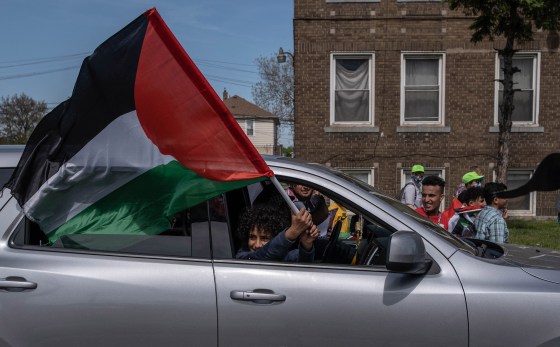
As President Joe Biden arrived Tuesday in Dearborn, Michigan—a city known for it’s sizeable Arab-American population—to tour a Ford factory, thousands of pro-Palestinian protesters took to the streets, accusing the U.S. of helping Israel bombard Palestinians with repeated airstrikes in the Gaza Strip over the past two weeks. The U.S. gives Israel $3.8 billion annually in unconditional aid and recently approved a $735 million weapons sale to the country. Scenes of pro-Palestinian protesters coming out in droves echoed those in March 2014, when about 20,000 demonstrators congregated in Washington D.C. to protest U.S. support for a prior Israeli incursion into the Gaza Strip, a few days after Congress approved millions in aid to Israel.
But this time, pro-Palestinian activists say their numbers are being swelled by a more intersectional progressive coalition of supporters in the U.S. who are willing to criticize Israel’s actions. It’s not just Muslim and Palestinian-American groups marching in the streets and posting online, but also organizations like Sunrise Movement, typically focused on the environment. More than 100 progressive groups signed onto a May 14 statement asking Biden to denounce “Israel’s use of disproportionate and deadly force against Palestinians in Gaza” and “condemn Israeli government plans to forcibly displace Palestinians in occupied East Jerusalem.”
Read More: How a Palestinian Uprising Against Israeli Forced Evictions Spiraled Rapidly Toward ‘Full-Scale War’
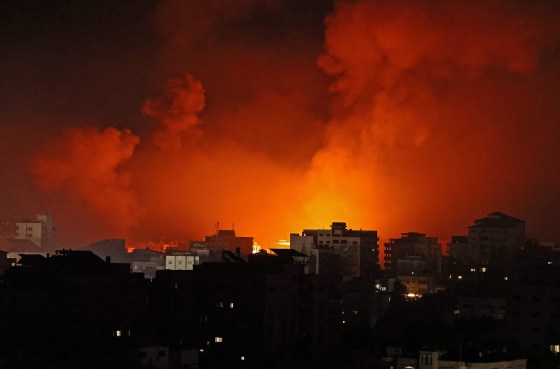
Tens of thousands of Americans protested in cities across the U.S. over the last week—including in Washington, Dearborn, Dallas, Sacramento, Philadelphia, New Orleans and more. Video and imagery of the destruction in Gaza was shared and amplified on social media by prominent racial justice activists, many of whom have a greater platform after the Black Lives Matter protests over the last year and the subsequent broader racial reckoning in the U.S. “Seeing the injustice of people being brutalized in Jerusalem, or homes being destroyed in Gaza on social media really helps people understand that, okay, maybe there is complex history behind this, but what I’m seeing is wrong, and we need to speak out against it,” says Kristian Davis Bailey, communications manager at Palestine Legal, which provides legal advice and support to pro-Palestinian activists in the U.S. Bailey, who co-founded Black for Palestine, has worked extensively on building Black-Palestinian solidarity.
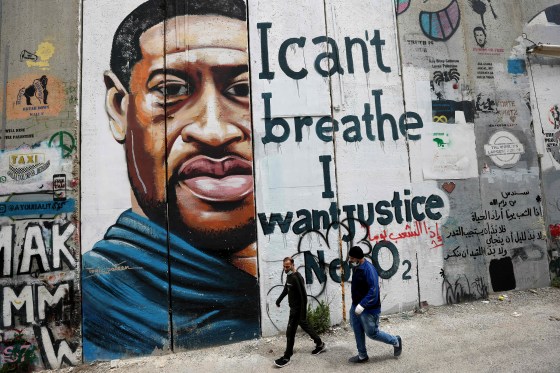
Even beyond activist circles many say there is a greater understanding of systematic oppression today thanks to the work of BLM and other movements for equity. “We really have to credit our partners… in Indigenous movements and…the Black liberation movements who have taught the world—taught the U.S. certainly—about state violence, [and] how settler colonies oppress,” says Sandra Tamari, executive director of Adalah Justice Project, a U.S. based Palestinian advocacy organization. “That analysis was there. And then Palestine enters the picture. People are primed. They know how to protest.”
That is not to discount the influence of Palestinians on the ground—who staged a historic, unified general strike on Wednesday—as well as years-long work of the vocal Palestinian diaspora, she adds, many of whom are barred from returning to their family’s homes by Israel and don’t want the U.S. to spend their tax dollars on furthering Palestinian suffering. “Palestinians have been doing amazing grassroots organizing for many decades—but certainly in the last 10 years—to make sure that people understand that Palestine is not just thousands and thousands of miles away. Palestine is here,” she says.
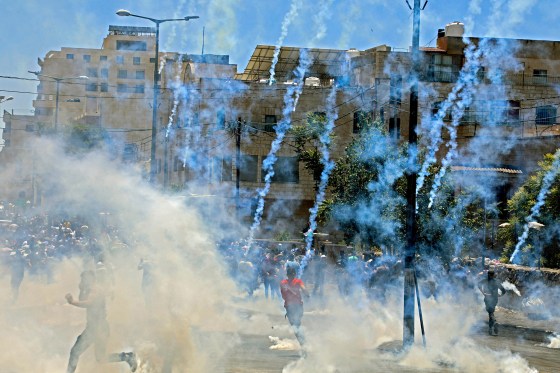
Although Hamas militants in Gaza and Israel reached a ceasefire agreement Thursday, tensions quickly reemerged on Friday as Israeli forces again used stun grenades and tear gas against Palestinians at the al-Aqsa Mosque compound. CNN reported that “dozens of Israeli officers hit journalists with batons and tried to point rifles at them, calling them “liars” when they showed them their press cards.” Once again, these visuals flooded social media and Palestinians and those in solidarity with them appear to be even more fired up. “Israel attacking Palestinians just hours after the ceasefire shows this was never about defense but about domination,” tweeted Ahmad Abuznaid, executive director of the U.S. Campaign for Palestinian rights.
The role of social media
The latest surge of violence began after protests in East Jerusalem over the potential forced removal of Palestinian families from their homes in the Sheikh Jarrah neighborhood and the subsequent storming of al-Aqsa Mosque by Israeli forces in early May. While the Israeli Foreign Ministry has referred to the Sheikh Jarrah issue as a “real estate dispute,” the United Nations human rights office has said their displacement could constitute a “war crime.” Noura Erakat, a Palestinian human rights attorney, says their possible removal is simply a continuation of the “ongoing Nakba—the process of removal of native Palestinians with the intent of replacing them with Jewish Zionist settlers.” Hundreds of thousands of Palestinians were displaced from their homes as the result of the 1948 war that led to the founding of Israel. The U.N. reported on Tuesday that more than 52,000 Palestinians had been forced to flee their homes as a result of the latest Israeli air strikes.
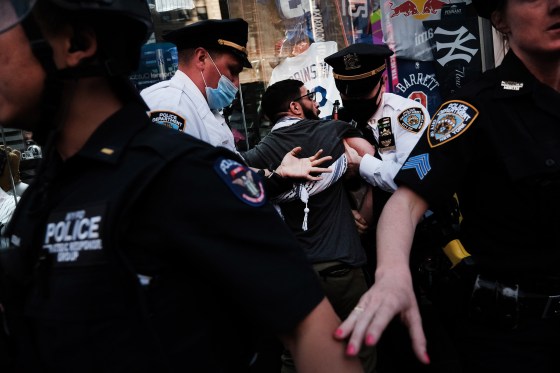
When East Jerusalemites took to the streets in protest, they documented it with the hashtag #FreeSheikhJarrah, which trended globally. Mohammed El-Kurd, a young Palestinian writer whose family faces possible removal by Israel from the homes where they have lived for years in Sheikh Jarrah, gained international attention and soon became a constant presence on social media and also on cable TV news.
His Twitter account, with 144,000 followers, is like a diary—a window into the life of a Palestinian living under occupation. When Israeli forces arrested him in a video circulating last week, his Twitter followers collectively panicked until he confirmed that he was in fact safe. “hello I am fine & unintimidated” he wrote on May 12; the post got more than 44,000 likes. On Wednesday, he participated in a livestreamed Zoom panel on Black and Palestinian solidarity, which also included activist Angela Davis. Had it not been for the Black Lives Matter movement’s resurgence after George Floyd’s death, “we wouldn’t be here today in terms of the global public shift in opinion regarding Palestine,” El-Kurd said during the event.
Infographics and quick explainers on social media platforms like Facebook-owned Instagram and Tiktok, have garnered thousands of likes, designed to demystify the language and history of occupation, apartheid, settler colonialism and ethnic cleansing in relation to Israel. Snapchat users globally could see for themselves on the app’s mapping function how Israelis in Tel Aviv were living in a different reality to Palestinians in Gaza.
The Israeli government has attempted to use social media to bolster its support, too, but in a particularly callous way. On Tuesday, The Arabic version of the state of Israel’s Twitter account cited a verse from the Qur’an alongside an image of Gaza being bombed. (The post has since been deleted.) They also singled out model Bella Hadid, who has Dutch and Palestinian heritage, for posting an Instagram of herself protesting in solidarity with Palestinians at one of many marches in the U.S. and falsely stated that she advocated for “throwing Jews in the sea.”
Israel appears troubled by the flood of content on social media—at least enough to prompt Israeli Defense Minister Benny Gantz to meet with top Facebook lobbyists and many TikTok executives over Zoom last week to discuss misinformation and violent threats on the platforms, according to POLITICO. Meanwhile, users in solidarity with Palestinians have accused social networks, including Facebook, of censorship—taking down pro-Palestinian posts, blocking livestreams, and suspending accounts. Over the last two weeks, 7amleh—the Arab Center for the Development of Social Media—documented “more than 500 reports of Palestinian digital rights violations.” The vast majority of the reports—85%—related to Facebook and Instagram.
Pro-Palestinian activists say it’s too late for Israeli officials or tech companies to turn the tide on social media. “Israel and Zionism are losing the PR war; there’s really no way to justify this sort of nationalism and oppression in 2021” says Abuznaid of the U.S. Campaign for Palestinian rights. “Not to this generation of people that were raised being told that equality and justice and liberty were values for all.”
How support for Palestinians went mainstream
In the past, it was rare for any high-profile figure—in entertainment, or sports, or business—to voice support for the Palestinians. Doing so has often come at a high cost with regards to career prospects or getting blacklisted on websites like Canary Mission that keep detailed and misleading dossiers of supporters of the Palestinian cause.
The author, academic and activist Cornel West, for example, believes he was initially denied tenure at Harvard in part because of his outspoken support for a free state of Palestine (Harvard later reversed its position). Now “the taboo of the Palestinian cause is being shattered,” he says, though emphasizes there’s still a long way to go.
In business, employees of Google and Apple, two of America’s largest firms, have pushed their executives to do more for the Palestinians, according to internal letters reported on by The Verge. Members of Apple’s Muslim Association circulated a letter calling on the company to recognize the Israeli occupation, while a group of Jewish Google employees and their allies urged Google to fund relief for Palestinians and recognize the harm done by the Israeli military. Neither Google nor Apple responded to media reports on the letters.
In entertainment, late-night host John Oliver recently dedicated a significant portion of his HBO show to the crisis in the region, laying out the asymmetry in a conflict that has led to the deaths of at least 232 Palestinians, including 65 children, and at least 12 people, including two children, in Israel. “Both sides are firing rockets, but one side has one of the most advanced militaries in the world. Both sides are suffering heartbreaking casualties, but one side is suffering them exponentially,” Oliver said.
The Palestinian struggle has also become a celebrity cause for people like musicians Zayn Malik and The Weeknd as well as actors Viola Davis, Susan Sarandon, and Mark Ruffalo, who is famous as much for his progressive activism as for his role in Marvel’s Avengers franchise. “When someone like Mark Ruffalo comes out and says free Palestine, people are less afraid…it raises the morale of activists,” says Amer Zahr, a Palestinian-American activist and president of U.S. based New Generation for Palestine.
Moreover, people from news anchors to social media influencers and celebrities are now talking about the Israeli occupation of Palestinian territories in a different way. This year, both U.S. rights group Human Rights Watch and Israeli rights group B’Tselem determined that Israeli officials were guilty of the crime of apartheid, the term—previously largely used only by pro-Palestinian activists—has become far more prevalent in mainstream discourse.
Among those who have used the term apartheid to describe Israeli policy are South African president Cyril Ramaphosa, South African cleric Desmond Tutu, Angela Davis, MSNBC’s Ali Velshi and progressive Democratic members in Congress such as Reps. Ilhan Omar and Rashida Tlaib. “Criticizing Israel in such justifiably harsh terms, like using words such as ‘apartheid’ or ‘ethnic cleansing’ are no longer radical fringe positions that can’t be said anymore,” says H. A. Hellyer, a Middle East expert and a scholar at the Carnegie Endowment for International Peace.
Israel vehemently rejects the claim that its treatment of Palestinians amounts to a systematic denial of rights on ethnic grounds, and dismissed the Human Rights Watch report as a “propaganda pamphlet” with “no connection to facts or reality on the ground.” But Palestinians and their supporters say it is important to use these terms, because anything less obscures the reality. “It’s not a conflict, it’s an occupation, it’s apartheid. It’s not evictions, it’s ethnic cleansing. [Palestinians] didn’t get kicked out because they didn’t pay rent but because they’re not Jews,” Zahr says.
West, who refers to Israel’s expansionism in Palestinian territories as “ethnic cleansing” says “anytime you’re pushing out people at gunpoint from their land, there’s no other description.”
Nevertheless, it’s hardly risk-free to speak out on Palestinian issues; Butler University abruptly canceled a talk with Angela Davis on April 1, after controversy over her support for Palestinian rights. Many on Twitter were incensed Friday by the Associated Press’ recent dismissal of a young news associate after conservative groups came after her for pro-Palestinian activism in college.
Changing politics
While pro-Palestinian activists agree that something about this moment feels unprecedented, the groundswell of support has not yet resulted in policy changes that they want. Their demands include not just an end to Israeli airstrikes but also sanctions against Israel, cutting off unconditional U.S. aid, an end to “apartheid discrimination and racism in all of Palestine,” and ending Israel’s blockade of the Gaza strip. While Biden has urged a return to “sustained calm,” Palestinians are saying that preceding years were never a true normal for them and that the status quo would not be enough.
The U.S., which was the first country to recognize Israel as a state in 1948, has for decades displayed unwavering bipartisan support for Israel—whether by blocking U.N. security council resolutions critical of the country or publicly supporting its military attacks. The two countries continue to collaborate on “joint military exercises, research, and weapons development,” per the U.S. State Department. And in 2017, former President Donald Trump recognized Jerusalem as the capital of Israel even though Palestinians hold the city as the rightful capital of a Palestinian state. Biden has said he does not intend to reverse the controversial and unprecedented measure.
Read More: Biden Is Struggling to Stay Out of the Conflict Between Israel and Hamas
The White House sent out an email Friday pasting excerpts of praise for the ceasefire—and Biden’s efforts to help establish one—from Congressmembers, commentators and advocacy groups, including AIPAC, Democratic Majority For Israel, Jewish Democratic Council of America and Israel Policy Forum. It did not feature any Palestinian or Muslim voices.
In recent days, Biden has repeatedly stressed the right of Israel to defend itself from Hamas rocket attacks but not commented explicitly on the right of Palestinians to defend themselves or the proportionality of Israel’s response. “I don’t think it’s constructive,” White House press secretary Jen Psaki said Monday after being asked whether the president doesn’t want to answer whether the Israeli response has been disproportionate.
Although Biden told Israeli Prime Minister Benjamin Netanyahu that he “expected a significant de-escalation [on Wednesday] on the path to a ceasefire,” per the White House, his administration also previously blocked a statement by the U.N. Security Council calling for an end to the crisis in Gaza. Netanyahu’s government has since agreed to a ceasefire with Hamas.
But Biden is under ever greater pressure from the left of his party to shift course. Palestinians have a small but significant band of supporters in Congress, including Rep. Tlaib, herself a Palestinian-American, who confronted Biden about her frustrations with his response to the crisis during his visit to Michigan. And Rep. Alexandria Occasio-Cortez is attempting to block the $735 million weapons sale to Israel through a resolution.
Yasmine Taeb, an Iranian-American human rights attorney, boycotted the White House’s Eid Celebration in May because of her frustration with the White House’s refusal to act tougher on Israel. While it’s not the first time that Muslim groups have called for a boycott of the White House Eid event, it’s not often that so many invited groups and individuals actually do. “Biden had pledged during the campaign that he was going to make human rights the center of U.S. foreign policy, and Israel should be no exception, period,” Taeb says.
While support for Israel is still strong across the general population, attitudes were beginning to shift even before the latest escalation in violence. A Gallup poll conducted in February found that 52% of Americans support an independent Palestinian state and 34% want more pressure on Israel, which Gallup notes is the highest level of demand for pressuring Israel in their trend data from 2007.
A POLITICO-Morning Consult Poll released Wednesday of almost 2,000 registered voters between May 14-May 17 revealed a generational divide—with younger generations being relatively more sympathetic to Palestinians compared to the generations before them. Among GenZers, born between 1997-2012, 13% said they were sympathetic to Israelis and 23% said they were sympathetic to Palestinians. (The rest indicated that they either had equal sympathy between the two sides or didn’t know or have an opinion on the matter.) Among Baby Boomers, born between 1946-1964, 37% said they were more sympathetic towards the Israelis and 8% said they were more sympathetic towards Palestinians.
Despite the building demand from a growing coalition of Americans, including his party supporters, Biden is not yet showing signs of wanting to intensify that pressure. During his visit to Michigan, a video captured by USA Today showed a reporter asking the president while he was test driving a Ford electric truck whether he would be willing to answer a question about Israel. “No, you can’t. Not unless you get in front of the car as I step on it,” Biden said, before quickly adding, “I’m only teasing.”

Comments
Post a Comment