New top story from Time: Latino Entrepreneurs Were Among the Hardest Hit by the Pandemic. Now They Could Spur the Economic Recovery
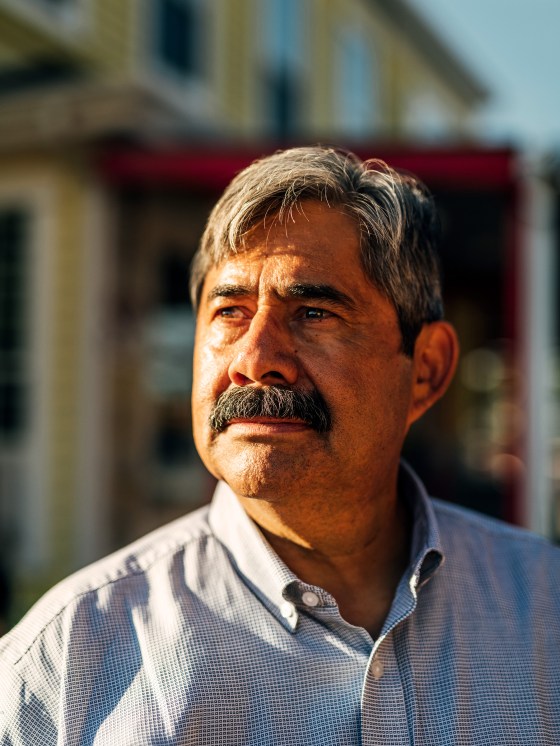
Jaime Macias could hardly have opened his bar and restaurant, Jaime’s Place, at a worse time. In the weeks before his scheduled grand opening in October 2020, COVID-19 ran rampant through San Antonio. Restrictions had shuttered the doors of bars and restaurants, and Macias’ own Latino community was particularly hard hit, with people dying at higher rates than the overall population. Macias, 56, had poured his life savings into the restaurant on the West Side of the city, and unexpected costs brought him within $800 of going broke before the restaurant even opened.
A year later, a stream of loyal customers fill Jaime’s Place each night, drawn by publicity Macias’ 26-year-old daughter Gabriela posts on Instagram and Facebook, to watch live performances or dance under a tin canopy decorated with Mexican papel picado. Regulars ranging from agricultural workers to officials from the San Antonio mayor’s office gather at tables in the bar’s open lot. Although the Delta variant of the virus remains a threat to the community and its businesses, Macias has a renewed sense of optimism about the bar. “Gentrification has a way of eradicating what once was, kind of whitewashing everything,” he says in his Chicano accent, seated at a wooden table outside, as Selena’s “Fotos y Recuerdos” plays in the background. “I wanted to make sure that Jaime’s Place planted the flag … We’re here por vida [for life].”
[time-brightcove not-tgx=”true”]
Jaime’s Place may prove to be one of the thousands of Latino-run businesses to help guide San Antonio—and the U.S. at large—out of its devastating pandemic-induced economic slump. Over the past 10 years, Latino entrepreneurs have started small businesses at a higher rate than any other demographic, all while facing higher hurdles than their white counterparts. Before the pandemic, the roughly 400,000 Latino-owned businesses in the U.S. with at least one employee generated nearly $500 billion in revenues a year and employed 3.4 million people, according to a 2020 Stanford Graduate School of Business report citing 2018 Census Bureau figures. Now, according to the U.S. Department of Labor, Latinos will make up a projected 78% of net new workers between 2020 and 2030.
In San Antonio, which is America’s seventh largest city, a fifth of businesses—or roughly 7,000—are Hispanic-owned. But although that proportion is one of the highest in the nation, it is nowhere near representative of the actual population, which is 68% Hispanic. In San Antonio, Hispanic residents are almost twice as likely as non-Hispanic white residents to be living on an income of less than $25,000.
Barriers to entry, such as language and a lack of access to established infrastructure, have historically been high for Latino entrepreneurs. Those challenges were exacerbated when COVID-19 struck, shuttering many of the businesses most commonly run by Latinos, such as restaurants, cleaning services and retail shops, forcing owners and workers to dip into their often meager savings.
Ramiro Cavazos, president and CEO of the United States Hispanic Chamber of Commerce, says that Latino business owners typically have less access to funding than their white counterparts and that only half of them have a banking relationship. That meant many of these owners had difficulties accessing the Small Business Administration’s Paycheck Protection Program (PPP) loans last summer, aimed at keeping workers on the payroll during the pandemic, because they were distributed primarily through banks. “The businesses that were able to apply for and receive those forgivable loans first were larger, more successful nonminority businesses,” Cavazos says.
But now a pandemic that threatened to decimate the community might usher in the next era of small-business growth. Economic leaders like U.S. Treasury Secretary Janet Yellen believe Latinos will be essential to driving the economic recovery, just as they were after the Great Recession. From 2007 to 2012, the number of Latino-owned businesses in the U.S. grew by 3.3%, compared with a decline of 3.6% among other businesses during that period. “If history is any guide, Hispanic-owned businesses will drive a large portion of the recovery,” Yellen said during a press conference in March. A 2020 report by consultancy firm McKinsey & Co. found that the long-term recovery of the U.S. economy is “inextricable from the recovery of Hispanic and Latino families, communities, and businesses.”
Members of the Latino small-business community in San Antonio say the pandemic has accelerated several positive developments. They have become more connected with their communities, and many have adopted digital strategies to reach more customers. Some have also benefited from easier access to capital.
“COVID has opened our eyes to the fact that nobody is successful working in silos,” says Mariangela Zavala, the executive director of the Maestro Entrepreneur Center, a small-business incubator in west San Antonio. “We’re vulnerable by ourselves, and we really need community in order to grow.”
Many local entrepreneurs—mom-and-pop businesses that once relied on proximity to a local, loyal customer base—embraced social media to reach new customers as foot traffic stalled. Lazaro Santos, 32, set up his coffee-truck business, Me Latte, in August 2020, offering signature flavors from his hometown of Piedras Negras, Mexico.
Business started out slow, but immediately spiked after a popular local food influencer, S.A. Foodie, posted a video raving about Santos’ horchata iced latte. Before long, Me Latte’s Instagram account was inundated with new followers (now more than 4,800). Santos posts new photos every few days, featuring oat-milk-latte art and grinning customers. He and his wife Melissa, who helps him run the accounts, spend at least 10 hours a week on digital marketing on Instagram, Facebook and TikTok. Santos says the social engagement across all platforms has led directly to a 60% increase in sales, and he is now looking to experiment with different forms of marketing.
At his teal-colored Me Latte trailer, parked just off the 1604 highway, Santos receives a notification on his phone. Melissa Santos just shared a photo of Lazaro pouring cream into a latte on Me Latte’s Instagram account. He hopes it will remind his customers to visit. “It’s just about being there, you know—presencia.”
Small businesses are also strengthening community bonds as a business strategy. Maestro Entrepreneur Center, based in an abandoned elementary-school building in one of the poorest neighborhoods in the West Side of San Antonio, was founded by Julissa Carielo five years ago, funded by a mixture of public and private capital. Currently, 42 businesses share the space, chasing their dreams in catering, cosmetology or accountancy. Maestro puts on classes, provides digital support and connects cooks with veteran chefs to develop recipes.
Teresa Garcia, whose company Food Safety Direct provides training and certification for food handlers, has been with the Maestro center since 2019. When the pandemic struck and people stopped attending classes, Maestro gave Garcia a one-month reprieve on her rent and helped her to apply for grants. Experts there also helped her pivot her business to a hybrid model, offering food handlers training and certifications through virtual and in-person classes, she says.
A year and a half later, Garcia’s business has “100% returned” to its pre-pandemic levels. The support she received encouraged her to pay it forward in her community, running weekend job fairs in local malls to match up unemployed people with restaurants needing staff. For Garcia, it’s a virtuous circle. “If the restaurants are doing well, then I’m doing well—even if it means I have to do some food-handler classes for free,” she says.
Other local organizations such as the San Antonio Hispanic Chamber of Commerce, San Antonio for Growth on the Eastside and the San Antonio Chapter of the Texas Restaurant Association have pooled education and resources, making sure the most vulnerable businesses aren’t left behind. The Chamber of Commerce has been hosting webinars on financial literacy and social media for beginners. Sandi Wolff, head of strategic relations at the Chamber of Commerce, says the organization waived its membership dues to foster connection, keeping all its members last year. She says “people are realizing they can absolutely use us to promote themselves and connect with other businesses.”
Although these organizations can provide support and education, small businesses can go only so far without funding. Capital is the biggest hurdle Latino entrepreneurs face, says the U.S. Hispanic Chamber of Commerce’s Cavazos. The Stanford study found that just 51% of Latino business owners receive all or most of the funding they apply for from national banks, compared with 77% of white business owners.
Cavazos says larger banks historically “were not reaching out to our community because in their eyes, a loan under $1 million was not worth the effort.”
When PPP loans were first rolled out, even the more established Latino-owned businesses struggled with the mountains of paperwork required. April Ancira, vice president of Ancira Auto Group, the first Hispanic Chevrolet dealer in the country, which has a strong relationship with the community-oriented Jefferson Bank, holds an M.B.A. degree and has been in her role for 15 years. Yet she says she couldn’t have completed the application without the help of numerous accountants and her company’s chief financial officer. “It honestly took a rocket scientist to apply for PPP,” she says.
Since the pandemic began, business leaders in San Antonio and beyond have worked with lenders to improve access to capital. Last fall, Houston-based Woodforest National Bank partnered with the Maestro center and Bexar County to award $15,000 each to 56 entrepreneurs in San Antonio, setting them up with business bank accounts and advisers from Maestro’s network.
Daniel Galindo, a senior vice president and community development and strategy director at Woodforest, has made investing in small businesses a priority, providing small loans to low-income borrowers, such as gardeners who might need to replace a lawn mower.
Some of Woodforest’s loans are as small as $500 and borrowers may be considered high risk, but Galindo says the lender is taking a holistic approach to banking. “We have larger institutions that sometimes say, ‘There’s not a whole lot of money in smaller money lending.’ But we need to stop looking at it from a revenue perspective,” he says. “Without a thriving community, banking wouldn’t exist.”
Woodforest often refers clients to more flexible micro-lenders like San Antonio–based nonprofit LiftFund. Lenders like these are becoming more prevalent, allowing small-business owners who previously felt alienated by banks to access capital without resorting to more predatory lenders with exorbitant interest rates. Isabel Guzman, the leader of the Small Business Administration, has stressed the importance of making lending easier and more accessible, and her agency has recruited more than 5,400 approved lenders like credit unions, community banks and fintech companies to make PPP loans, compared with 1,800 active lenders pre-pandemic, in an effort to distribute loans quickly and equitably.
The shifting environment for entrepreneurs has led to a flurry of post-pandemic activity and growth in San Antonio. Garcia says the food-truck and ghost-kitchen scenes—delivery-only restaurants catering to consumers still reluctant to eat out—are exploding across the city. Woodforest is seeing more interest in its entrepreneur-accelerator program than ever, Galindo says. And the Maestro center is adding to the pipeline with two 10-week accelerator programs for more than 50 local businesses.
While the lessons learned in San Antonio could prove useful to the 30 million other small businesses across the country helping to power the recovery, the role they play on the ground is just as significant. Businesses like Jaime’s Place serve as emotional lifelines after a devastating year and a half. For its largely working-class clientele, it’s where they want to spend their hard-earned cash. “[People] respect the place because it’s something that they’ve been longing for,” says Gabriela Macias. “It’s not just a bar but a place to gather and bring your kids and just be safe—and also celebrate your culture.”

Comments
Post a Comment