
70 Years at Elkton Shops: Part 1

70 Years at Elkton Shops: Part 1
By Jeremy Menzies

In this two-part blog series, we will look back at the history of one of our city’s hardest working transportation properties. For almost 115 years, the Elkton lot, located on San Jose Avenue between Ocean and Niagara Avenues, has been the epicenter of SF streetcar operations. In this post, we will explore the first 70 years at the property when it was known as “Elkton Shops”.

Built between 1905 and 1907 by the United Railroads of San Francisco (URR) on a several acre field in the outskirts of the city, Elkton Shops was the most comprehensive transit facility in the city. The new shops, mainly surrounded by farmland, were named after a Southern Pacific Railroad stop just steps away on Ocean Avenue.
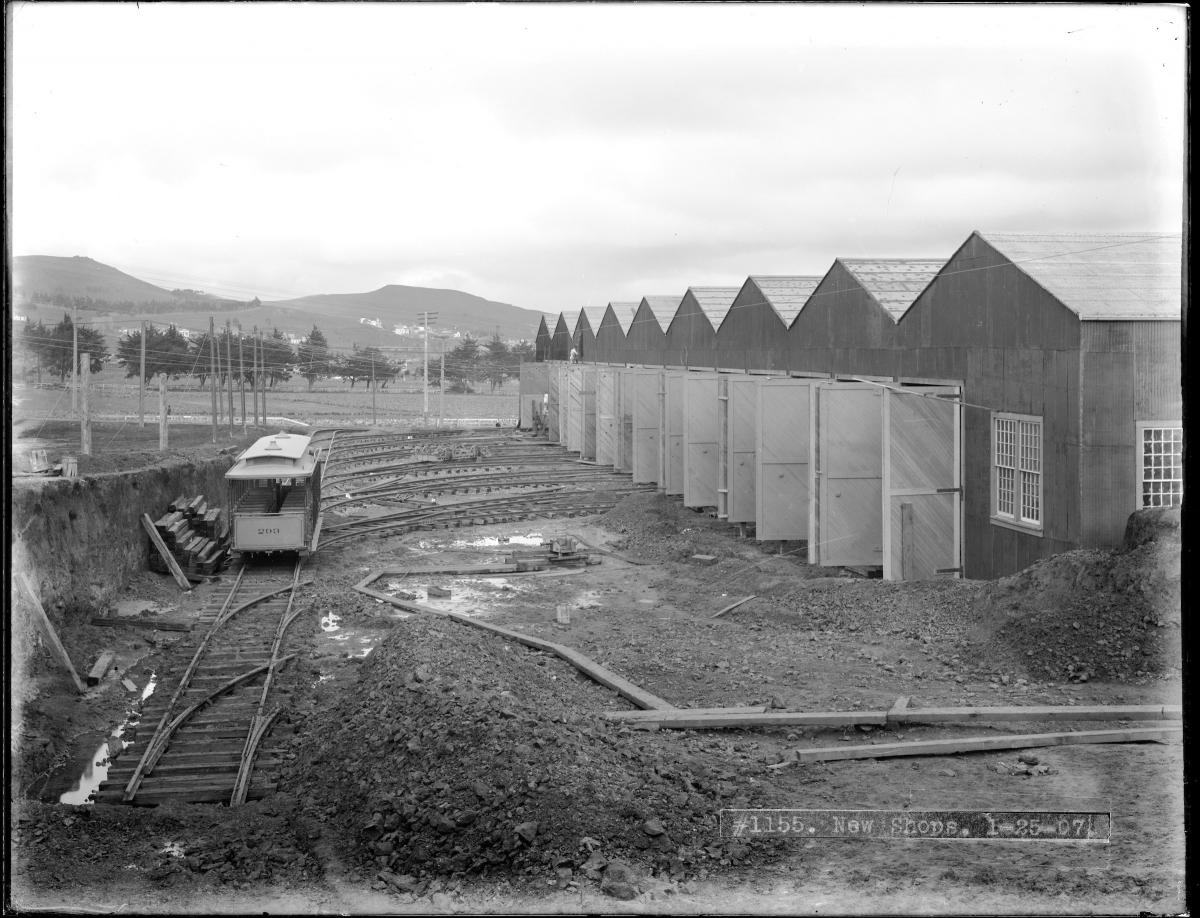
A lone cable car sits on a muddy ladder track outside the newly built Elkton Shops in this January 1907 shot.A lone cable car sits on a muddy ladder track outside the newly built Elkton Shops in this January 1907 shot.

In 1921, Elkton changed hands, going to the Market Street Railway Company after URR suffered years of financial troubles. During its heyday in the 1920s, Elkton Shops was a powerhouse of repair and production. A staff of over 350 people were responsible for building and overhauling hundreds of streetcars and cable cars to keep the railway’s sprawling system running.
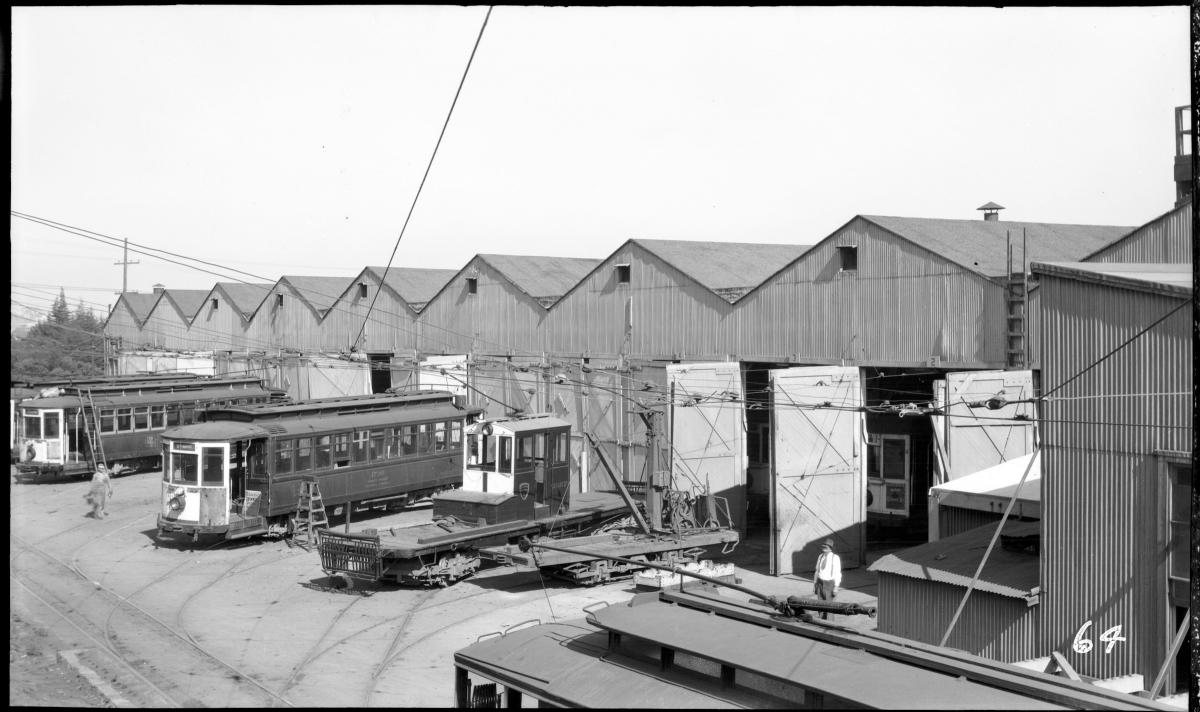
This 1928 photo was taken at the peak of production at Elkton Shops when staff was turning out 26 brand new cars a year on top of 316 complete overhauls and myriad other work.This 1928 photo was taken at the peak of production at Elkton Shops when staff was turning out 26 brand new cars a year on top of 316 complete overhauls and myriad other work.

Every type of job from replacing broken windows and upholstering seats to machining wheels, overhauling electric motors, and painting cars was performed in the shops. According to a 1928 article in the company’s newsletter, the average time it took to completely overhaul a streetcar at Elkton was 19 days. On average, 22 cars would be in the shops undergoing the process at any one time.
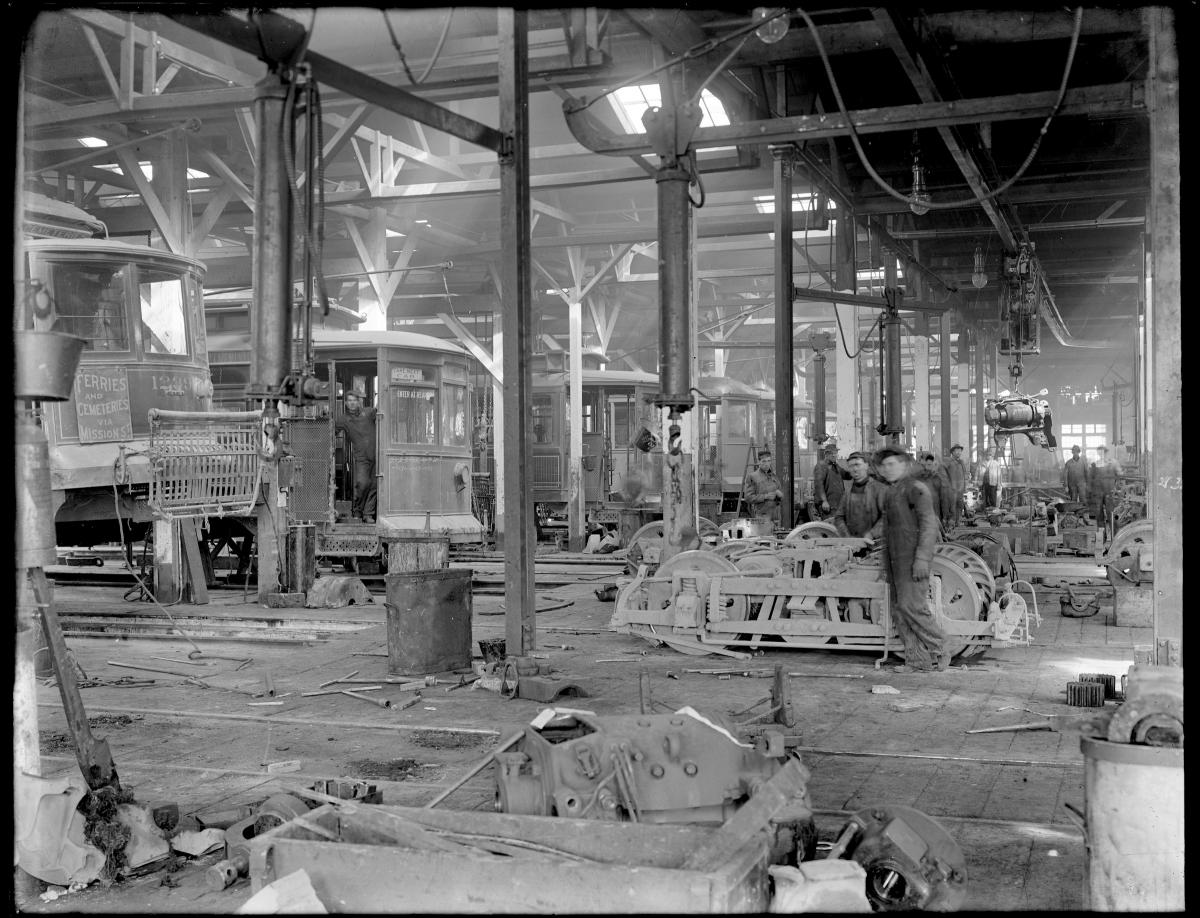
A view inside the overhaul shop in 1912 showing a row of streetcars at left and staff tearing down trucks and motors at right.A view inside the overhaul shop in 1912 showing a row of streetcars at left and staff tearing down trucks and motors at right.

In 1944, the Market Street Railway Co. was purchased by the city and Elkton became a part of the now greatly expanded San Francisco Municipal Railway. The heyday of streetcars would soon be coming to an end but the ramshackle old shops continued to hold a valuable place in the future of Muni.
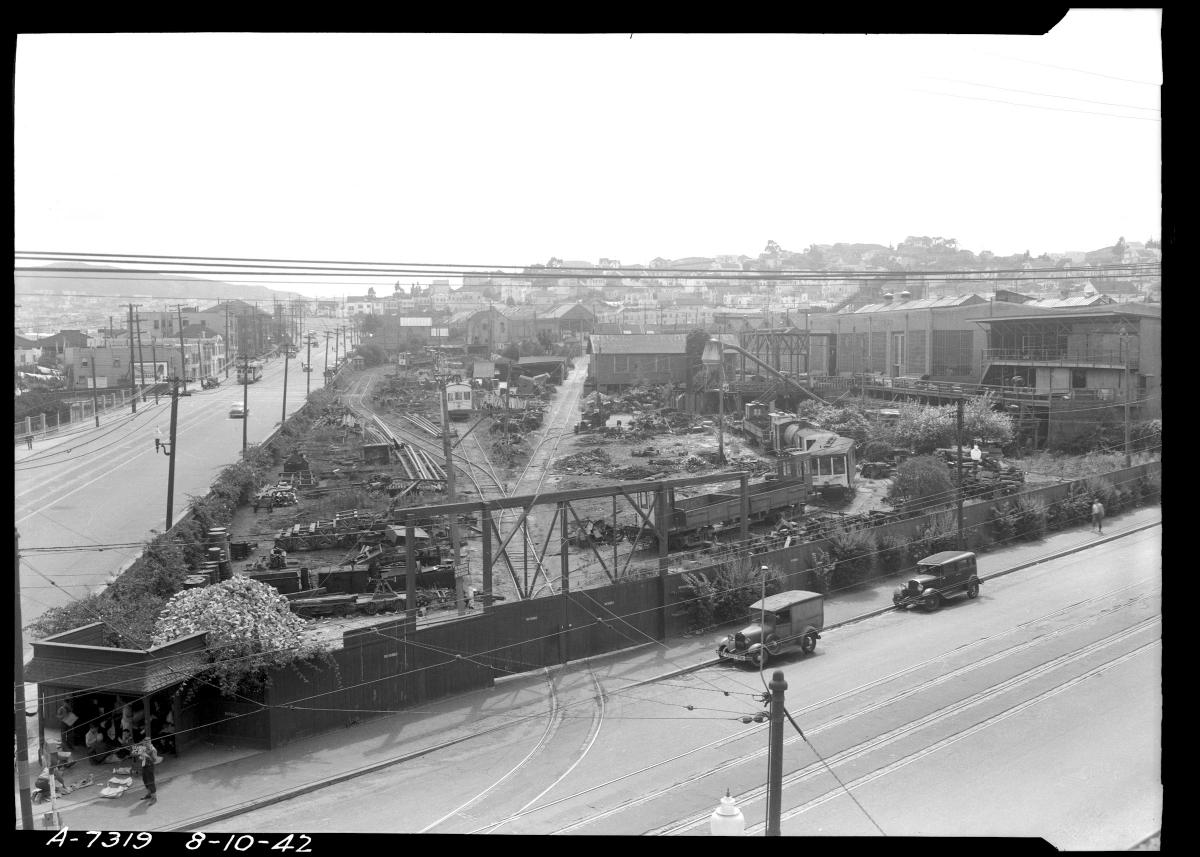
A view inside the overhaul shop in 1912 showing a row of streetcars at left and staff tearing down trucks and motors at right.This 1942 shot shows Elkton’s rear yard crowded with everything from cobblestones to streetcar wheels.

Following World War II, Muni began quickly expanding its bus fleet and in 1948, Elkton’s rear yard was cleared and excavated to build the Ocean Division bus yard. The new yard would provide fueling, maintenance and storage for Muni’s growing fleet, including newly leased Mack buses. Elkton Shops remained in service next to the bus yard for another two decades.
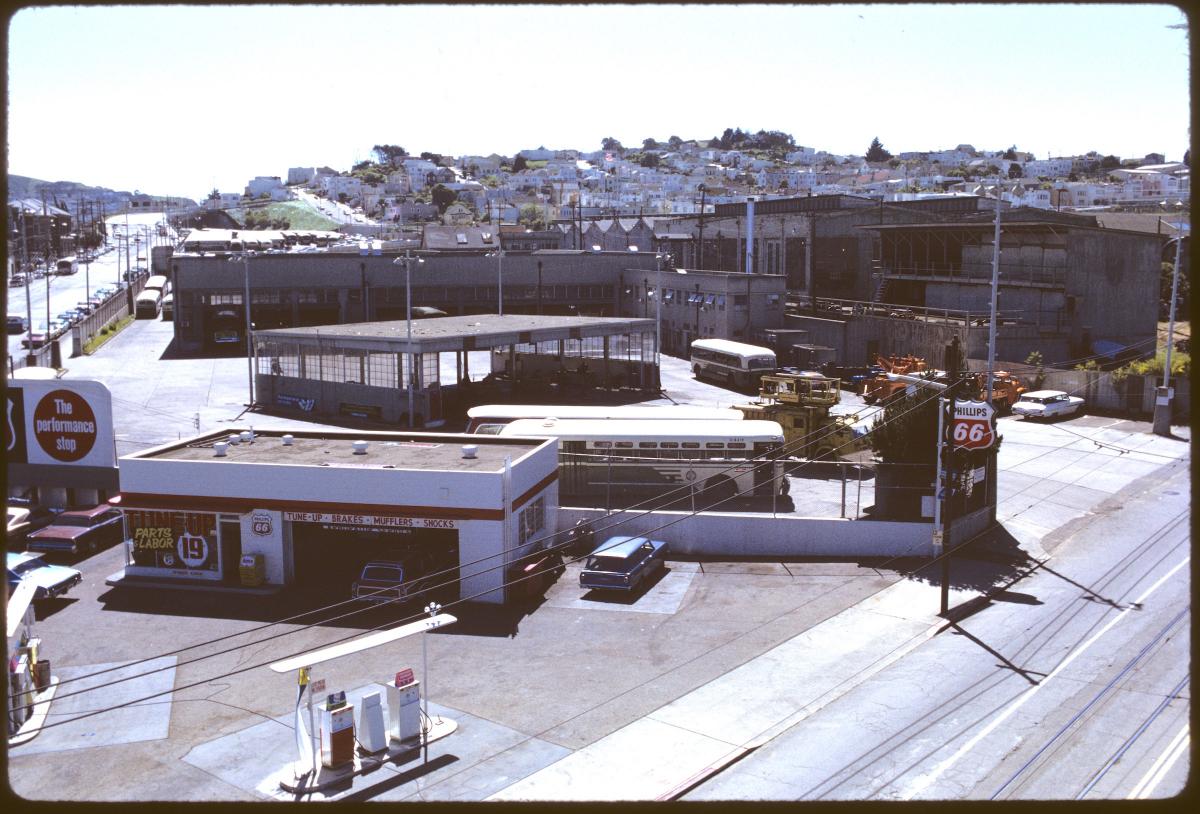
Looking southwest from San Jose and Ocean Avenues, this view shows Muni’s Ocean Division in 1972. At the left is a service station, center the fueling and shop buildings and at right are the Elkton Shops.Looking southwest from San Jose and Ocean Avenues, this view shows Muni’s Ocean Division in 1972. At the left is a service station, center the fueling and shop buildings and at right are the Elkton Shops.

The death knell for Elkton occurred in the mid-1970s as the city moved to bring Muni Metro to life with “light rail vehicles.” As these new trains travelled through a subway underneath Market Street, Muni needed a new facility to house and maintain this brand-new fleet. In 1975, Ocean Division was demolished and construction began on what would become the city’s first modern rail repair shop. Just two years later on May 27, 1977, workers at Elkton Shops punched their last timecards in the run-down old building. Four days later, the huge turn of the century shop buildings met their fate with the wrecking ball.
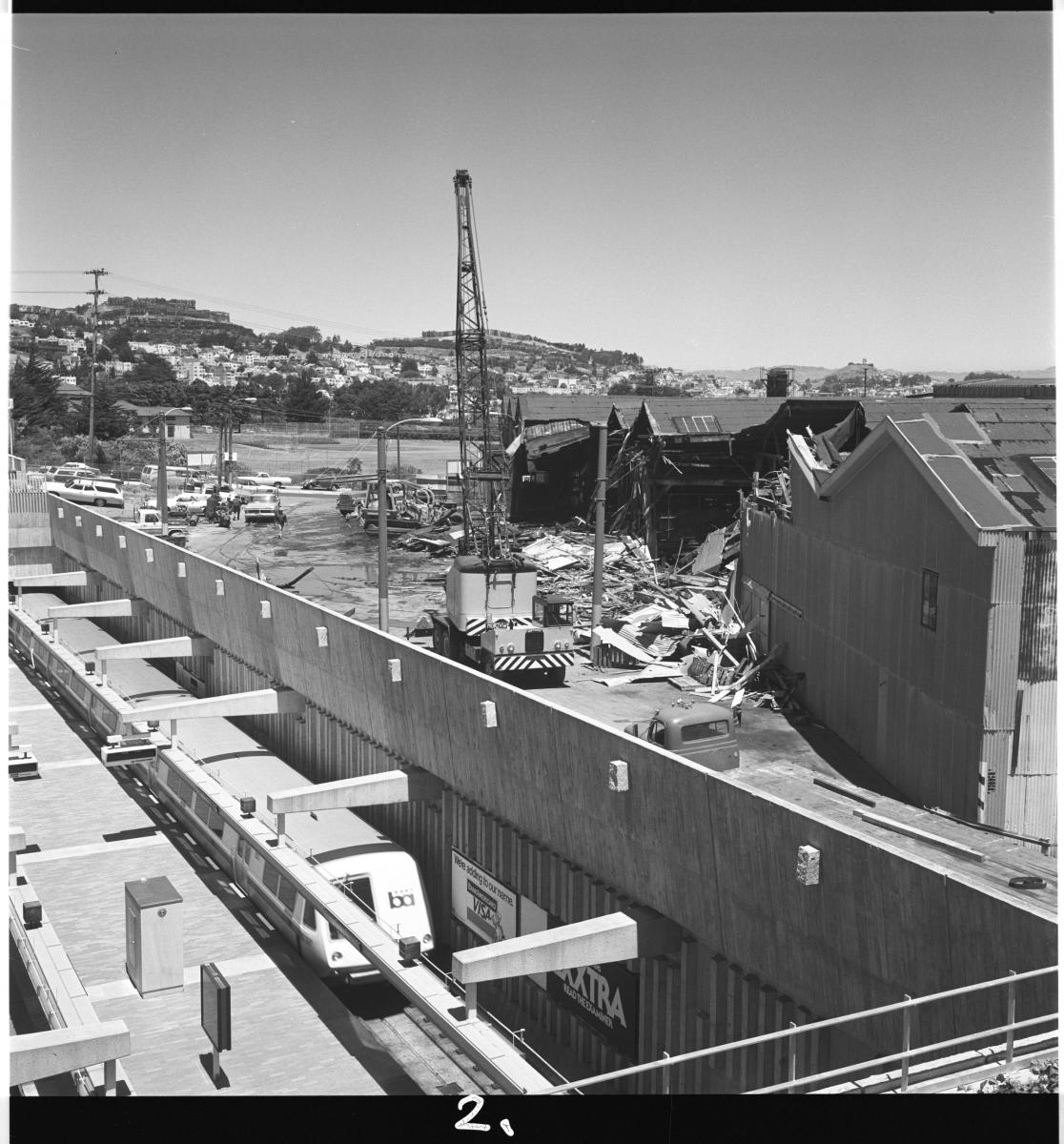
The end of an era came on May 31, 1977 when Elkton Shops was torn down after 70 years of service. In less than 3 years, a rail yard filled with brand new light rail vehicles would stand in place of the old shop buildings.The end of an era came on May 31, 1977 when Elkton Shops was torn down after 70 years of service. In less than 3 years, a rail yard filled with brand new light rail vehicles would stand in place of the old shop buildings.

Tune in next month for part two of this series and learn about the next phase of life at this storied property.


Published October 25, 2021 at 11:39PM
https://ift.tt/2ZsJG3E

Comments

Popular posts from this blog

Bring back the 'old normal' says author Lionel Shriver The coronavirus pandemic has killed tens of thousands and forced people across the world to re-evaluate what they think is really important.

via Entertainment News - Latest Celebrity & Showbiz News | Sky News https://ift.tt/2YcZvHd

New top story from Time: President Trump’s Brother, Robert Trump, Dies at 71

https://ift.tt/3g1Evdc (NEW YORK) — President Donald Trump’s younger brother, Robert Trump, a businessman known for an even keel that seemed almost incompatible with the family name, died Saturday night after being hospitalized in New York, the president said in a statement. He was 71. The president visited his brother at a New York City hospital on Friday after White House officials said he had become seriously ill. Officials did not immediately release a cause of death. “It is with heavy heart I share that my wonderful brother, Robert, peacefully passed away tonight,” Donald Trump said in a statement. “He was not just my brother, he was my best friend. He will be greatly missed, but we will meet again. His memory will live on in my heart forever. Robert, I love you. Rest in peace.” The youngest of the Trump siblings had remained close to the 74-year-old president and, as recently as June, filed a lawsuit on behalf of the Trump family that unsuccessfully sought to stop ...

Six Generations of Pint-Sized Buses Serve Muni’s Toughest Routes

Six Generations of Pint-Sized Buses Serve Muni’s Toughest Routes By Jeremy Menzies For over 80 years, special fleets of shorter than usual buses have been reserved for some of the City’s toughest routes. Winding through tight bends and climbing up steep grades, these pint-sized coaches ensure access to transit in neighborhoods where standard-length buses cannot go. As the SFMTA phases in a brand-new batch of shorter buses, here’s a look at all six generations of Muni’s “mini” fleet. “Baby White” Buses: 1938-1975 The first generation of short-length buses was intended for regular use on all Muni bus routes. Made by the White Motor Company in Cleveland, Ohio, this fleet came to SF in 1938. The buses were nicknamed “Baby Whites” after a group of longer White Co. buses arrived in 1947. In the mid 1950s, all but three of these buses were retired. The three saved continued to run on the 39 Coit Tower route until 1975—in service longer than any other bus before or after.   This bus ...

New top story from Time: Jasper Johns: “Dying While on Assignment Doesn’t Seem Like a Bad Idea”

https://ift.tt/39PD2WS Jasper Johns, possibly America’s most famous living artist and still plying his trade at 91, launches two retrospectives on Sept. 29; one at the Whitney Museum of American Art in New York City and the other at the Philadelphia Museum of Art . The exhibitions, known collectively as Mind/Mirror, illuminate the through lines of Johns’ large body of work: his fascination with such everyday symbols as numbers, targets, maps and flags; his sometime habit of limiting his color palette to red, blue, yellow and orange; and his exploration of such techniques as collage, hatching and scale. One section of the Whitney is dedicated to his variations on the motif of a Savarin coffee can crammed with brushes, which is widely believed to be the artist’s way of representing himself. Johns, who famously destroyed all his prior work before painting his first flag, lives in Connecticut and rarely gives interviews. He answered questions from TIME via email. [time-brightco...

New top story from Time: How Liberal White America Turned Its Back on James Baldwin in the 1960s

https://ift.tt/2QBsNzv In discussions about race relations today, the works of James Baldwin continue to speak to the present, even decades after they were written. So it is worth remembering that, at the very height of his influence, Baldwin experienced the same frustration that some Black activists, particularly on campus, feel about white liberals today: their refusal to acknowledge their complicity in the regime of white supremacy. In Baldwin’s case, the liberal backlash was widespread, and effectively marginalized him for a time. The very first piece on the front page of the very first issue of The New York Review of Books , Feb. 1, 1963, was a review of Baldwin’s The Fire Next Time by F. W. Dupee of the Columbia English department. Dupee (a former Communist Party organizer) took exception to Baldwin’s apocalyptic tone. “Do I really want to be integrated into a burning house?” Baldwin had written. The answer, Dupee wrote, is that “[s]ince you have no other, yes; and t...

New top story from Time: Britney Spears Asks to Address Court in Conservatorship Case

https://ift.tt/3xvaX1z (LOS ANGELES) — Britney Spears has asked to address the court to talk about the conservatorship that has controlled her life and finances for 13 years, her attorney said Tuesday, and a judge scheduled a June date to hear from her. Spears’ court-appointed attorney, Samuel Ingham III, said in a hearing in Los Angeles Superior Court that she had asked to speak to the court soon, and agreed with Judge Brenda Penny on a June 23 date. He did not say what she would specifically like to say. It would be the first known time in more than two years that the 39-year-old pop star has spoken in court. The last time, on May 10, 2019, the courtroom was sealed. None of what she said became public. The judge may also close the June hearing to the media and public. But Spears, through Ingham, has been pushing for more transparency in the court proceedings and documents of the conservatorship. Spears did not take part in Tuesday’s hearing, and she very rarely attend...

Govt offices in Bhubaneswar, Cuttack to function with 75 pc strength of employees in December https://ift.tt/2HQxXmI

All subordinate offices and departments in Bhubaneswar and Cuttack will function with 75 per cent strength of employees next month, the Odisha government said on Saturday. The directions cover entire staff including Group-A officers. The General Administration and Public Grievance Department on Saturday issued an official order in this regard and said that also said that all state government offices throughout the state will remain closed on Saturdays.

New top story from Time: ‘I Will Cry When I Deliver That Last Yogurt.’ Small Ranch Owners Are Selling Their Herds For Lack of Water

https://ift.tt/3l9IavO Gail Ansley delivered her final batch of homemade Picabo Desert Farms goat yogurt to Atkinson’s Market in Hailey, ID two weeks ago. As usual, each 16-oz unit of rich, creamy goat’s milk yogurt was packaged in a plain plastic container with a simple disclaimer stuck to the lid: “We know this label isn’t Chic, but the Yogurt inside is the best you’ll Eat!” it proudly proclaims . The ingredients: raw goat milk, culture, and sometimes gourmet vanilla bean paste sourced from nearby Boise, or fresh lemon curd, or peach jam. But this chapter is all over: she sold her last goat, a Nigerian dwarf named Kea, the weekend before. Kea was the final remaining animal in Ansley’s hundred-plus goat herd, which she grew and raised over the past six years on her small farm in Richfield, ID. “ And I will cry when I deliver that last yogurt tomorrow, ” Ansley says over the phone, audibly tearing up. “ When we started, my husband had a pickup truck and a camper, that’s wha...

BIG STORY: After ban on 59 Chinese Apps, 275 more apps including PubG, AliExpress on security agency radar https://ift.tt/39xDtUt

About 275 Chinese apps in India are on the government's radar for possible violations of national security and user privacy. A list of 275 apps have been drawn by the government which are being examined for national security violations and if found in breach, the apps are likely to be banned, Economic Times reports. The move comes after the government banned 59 Chinese apps last month including TikTok and WeChat. Government, report says was also looking closely at the apps which are not just Chinese but would also have investments from China. The move comes amid reports that even the United States was also mulling banning the Chinese Apps for sharing data with the state authorities in Beijing. 

New top story from Time: The World’s First Malaria Vaccine—and What it Means for the Future of Pandemic Response

https://ift.tt/3uQFdD3 On Oct. 6, the World Health Organization recommended use of the first vaccine to fight malaria . The decision is momentous and highly anticipated for many reasons: among them is that this is the first vaccine to help reduce the risk of deadly severe malaria in young children in Sub-Saharan Africa, where the disease remains a leading killer. The vaccine offers hope that there can be a circle of learning from one pandemic to the next. Malaria, our oldest pandemic, may offer insights on how we can survive contemporary scourges like COVID-19. Malaria evolved at least 2.5 million years ago and first infected humans in rural parts of Africa. It then spread to all continents save Antarctica—notably, killing off armies ranging from those trying to conquer ancient Rome to those battling to control the Pacific in World War II. Malaria, according to historians, may have killed more people than any other pandemic. [time-brightcove not-tgx=”true”] Malaria changed ...